Why pine straw is a different problem
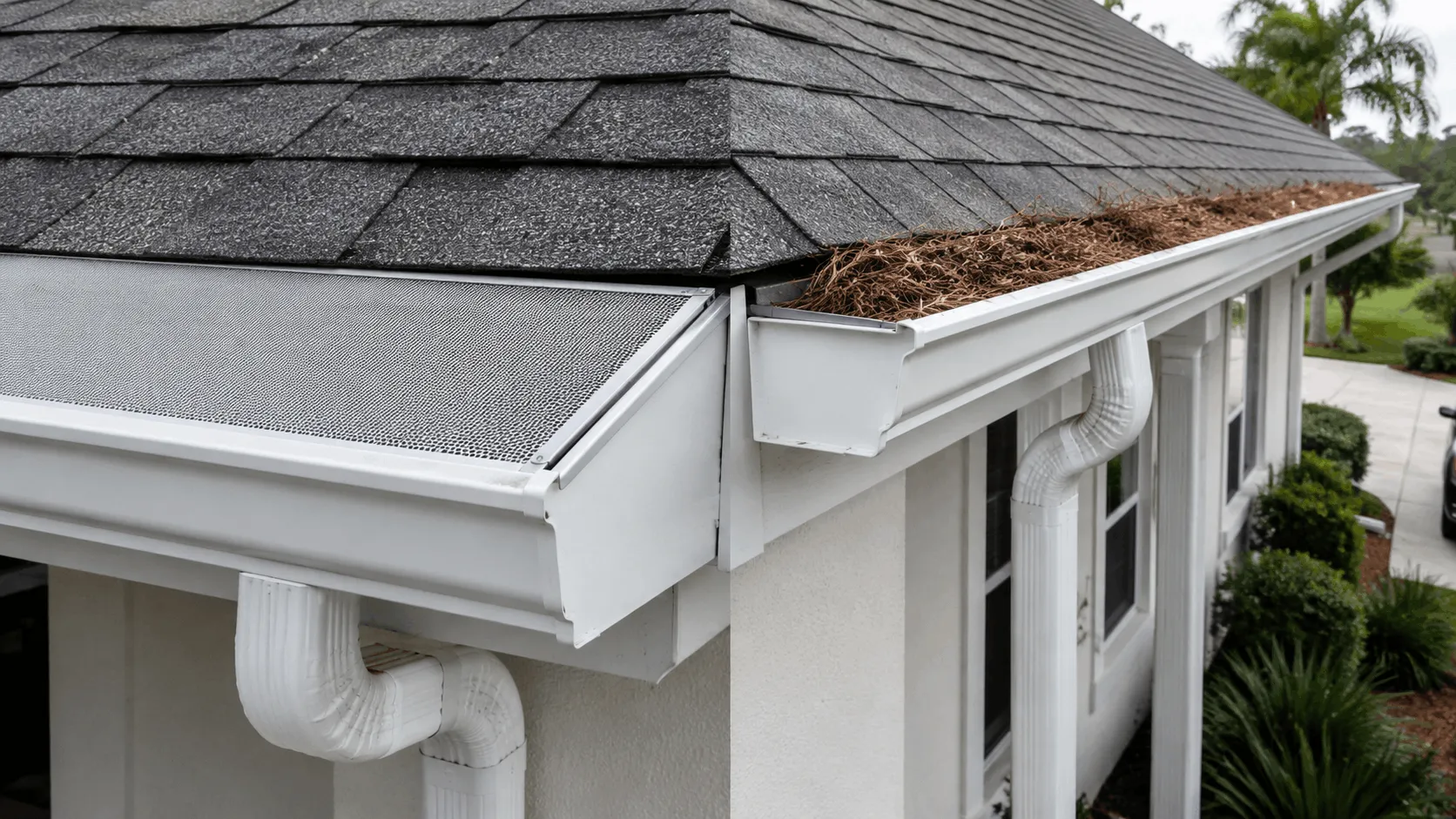
Most gutter guards are designed and marketed against leaves. A leaf is broad and flat, it sits on a surface, and almost any cover will stop it. A pine needle behaves nothing like that.
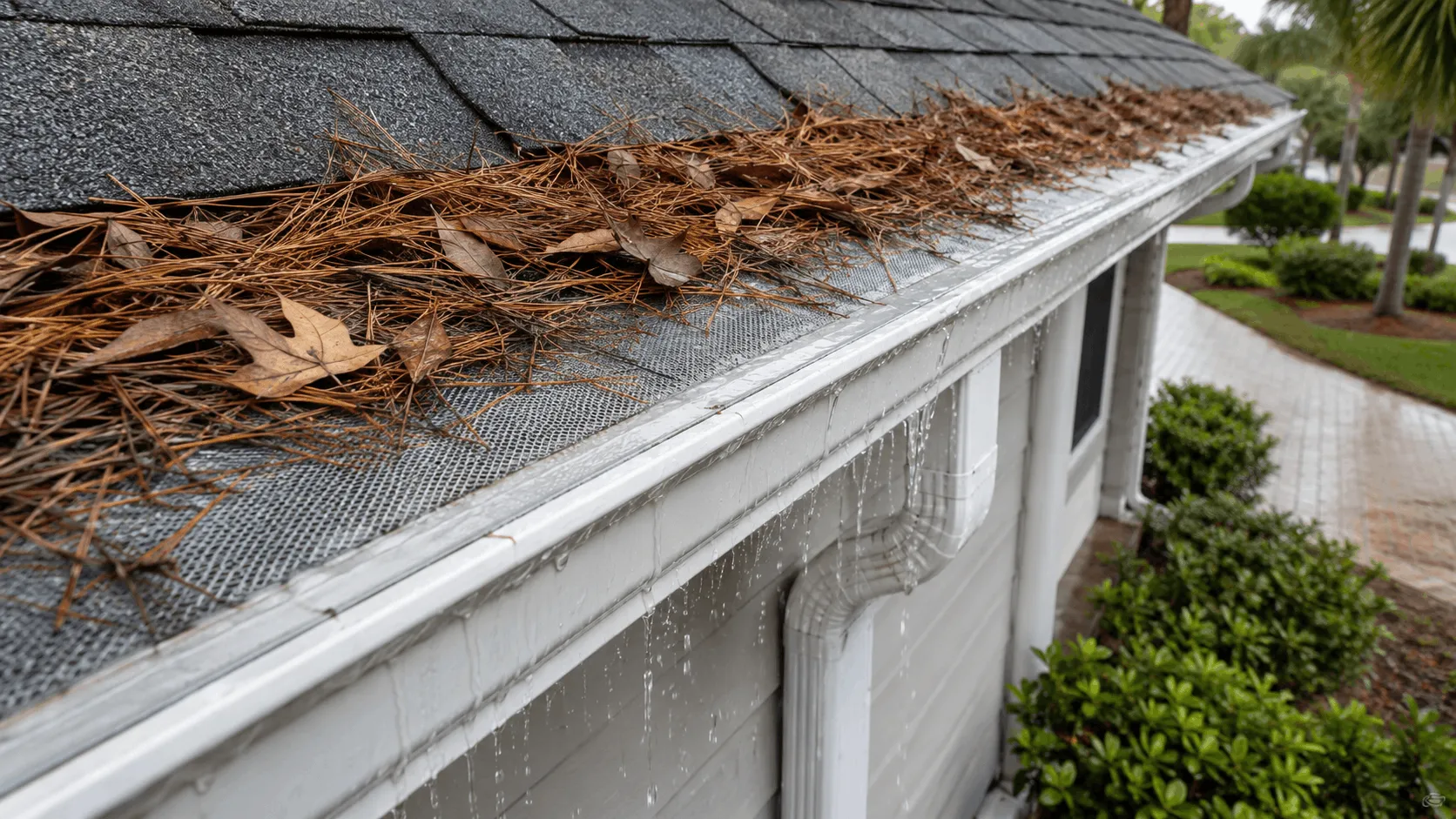
Needles from longleaf and slash pine are long, thin and rigid. They arrive in clusters, they slide rather than sit, and they are narrow enough to enter or wedge into openings that comfortably stop an oak leaf. That single difference is why a guard with good reviews elsewhere can disappoint on a Panhandle roofline.
How needles defeat the common guard types
Each of the cheaper categories fails in its own way once pine is involved.
- Wide-gauge screen. Needles pass through the openings or stand in them like bristles, then catch everything arriving afterwards.
- Foam inserts. Needles embed in the surface of the foam and stay there. The insert holds moisture and organic material and becomes a growing medium.
- Brush inserts. Straw threads into the bristles and is difficult to remove without pulling the whole insert out.
- Reverse-curve. Performance depends heavily on the nose gap. Fine debris can follow the water around the curve, and heavy flow can overshoot.
The pattern is consistent: guards that stop leaves by size do not necessarily stop needles, and guards that trap needles in a material are worse than an open gutter because the debris is now fixed in place.
What tends to work
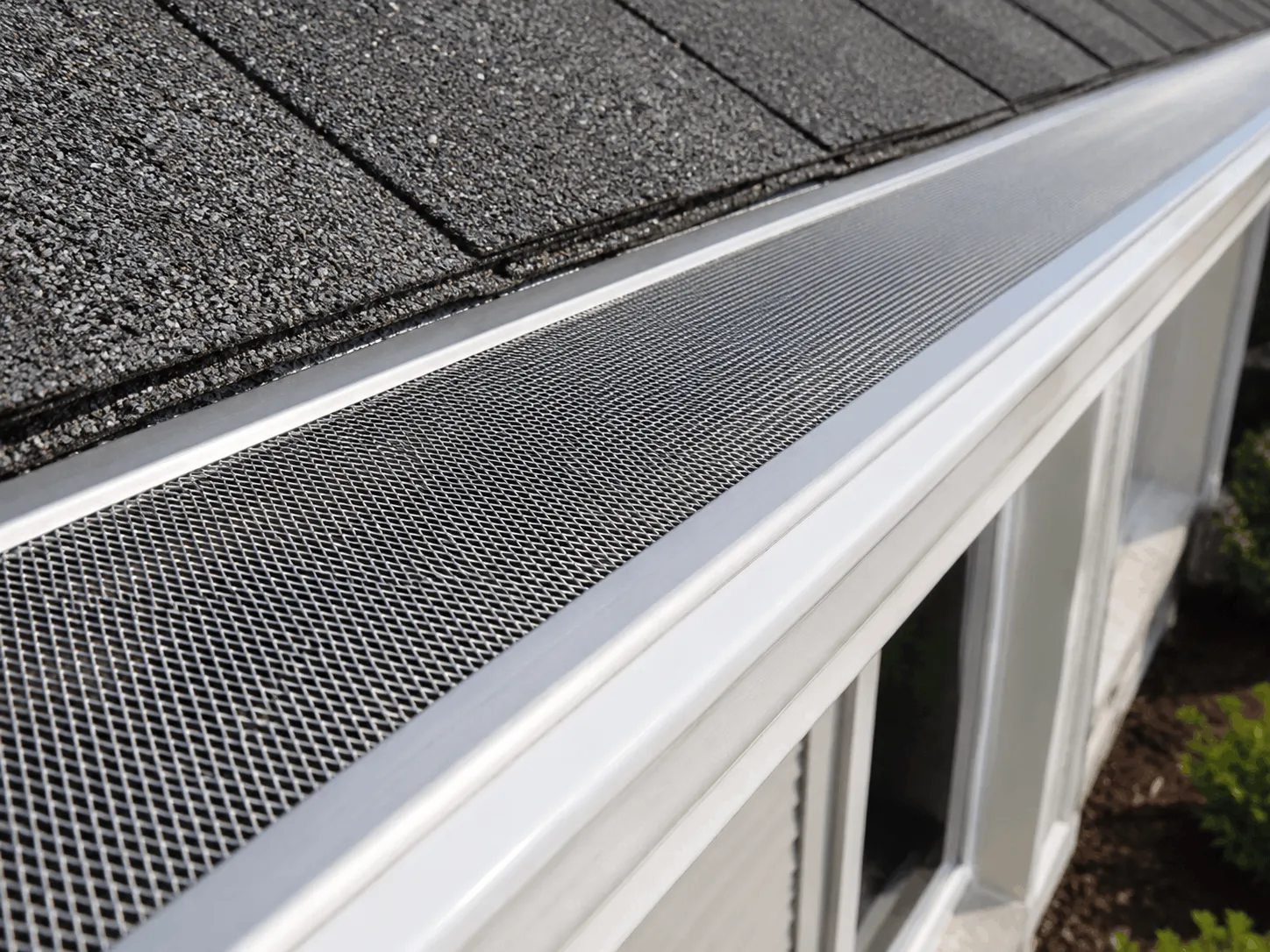
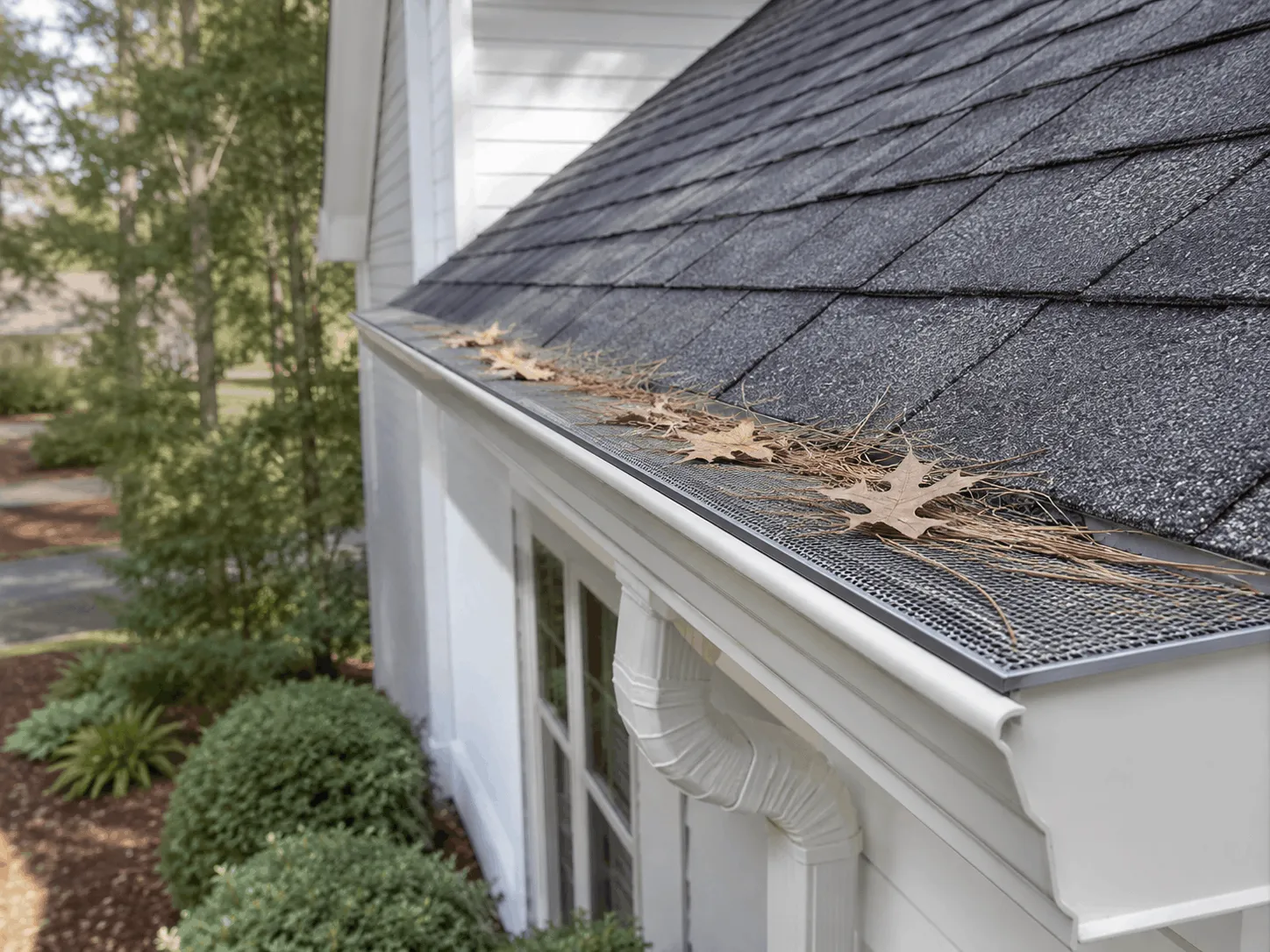
Fine stainless micro-mesh, held flat in a rigid frame and properly secured, is the type that holds up against pine in practice. Needles land on the surface as loose material rather than knitting into it, so wind and rain can move them off the edge.
Two details matter alongside the mesh. Surface angle helps needles shed rather than settle, and a rigid frame stops the mesh dishing into a low spot that collects everything. A fine mesh on a floppy backing gives back much of the advantage.
Pine straw is seasonal, not constant
Pines shed on their own schedule rather than following a single autumn drop the way many hardwoods do. Needle fall tends to be heaviest in the warmer months and can continue in waves through the year, which is why properties under pine often find gutters filling at times that feel out of step with a conventional cleaning calendar.
It also means a system that looked clear in spring can be carrying a load by late summer, right when storm season is testing it. Timing a check before the heaviest rainfall period is more useful than fixing to a set date.
What straw does once it is in the gutter
Needles compact. A trough that looks half full is often holding a dense mat that has already reduced the effective capacity far more than the depth suggests, and that mat holds water against the back of the gutter and the fascia behind it.
Given long enough, seed can germinate in the retained material. Growth in a gutter is a reliable sign the system has been holding moisture and debris for a considerable time, and it usually means checking the fascia as well as clearing the gutter.
Guards or more frequent cleaning?
Both are legitimate answers. If the roofline sits under substantial pine canopy and you are clearing gutters more than twice a year, quality micro-mesh usually earns its cost over a few seasons by changing that interval.
If pine cover is light or set back from the roof, regular cleaning at a sensible interval may be the better spend, and guards can be revisited later. The deciding factor is what is genuinely overhead, not a general rule about the region.
Checking your own roofline
Look at what is directly above and upwind of the gutter line rather than what is in the garden generally. Pines set back from the house still drop onto a roof in wind, and a single mature pine over one elevation can load one run far more heavily than the rest of the property. That uneven loading is common and worth mentioning when you ask for an estimate.
Debris by guard type
| Debris | Screen / foam | Micro-mesh |
|---|---|---|
| Pine straw | Clogs | Sheds |
| Oak leaves | Mostly OK | Sheds |
| Acorns | Catches | Sheds |
| Shingle grit | Passes | Passes |
If a guard cannot handle pine straw, it cannot handle a Panhandle roofline. Everything else is easy by comparison.
Common questions
Do gutter guards work against pine straw?
Fine micro-mesh in a rigid frame generally does. Wide-gauge screen, foam and brush inserts often do not, because needles pass through or embed in them and then trap everything arriving afterwards.
Why do pine needles get through guards that stop leaves?
Needles are long, thin and rigid, so they enter or wedge into openings that a broad flat leaf simply sits on top of. Guards rated on leaf performance are not necessarily rated on pine.
How often do gutters fill under pine trees?
It varies with how much canopy sits directly over and upwind of the roofline. Properties under substantial pine cover often need attention more than twice a year, and needle fall arrives in waves rather than one seasonal drop.
Can pine straw damage gutters?
Compacted straw holds water against the gutter and the fascia behind it, and adds weight to hangers. Over time that combination is more likely to cause problems than the debris itself.
Is foam a cheap alternative for pine areas?
It tends not to work out cheaper. Needles embed in the foam surface and the insert retains moisture and organic material, so it usually needs replacing or removing sooner than expected.