Judging guards on the debris you actually have
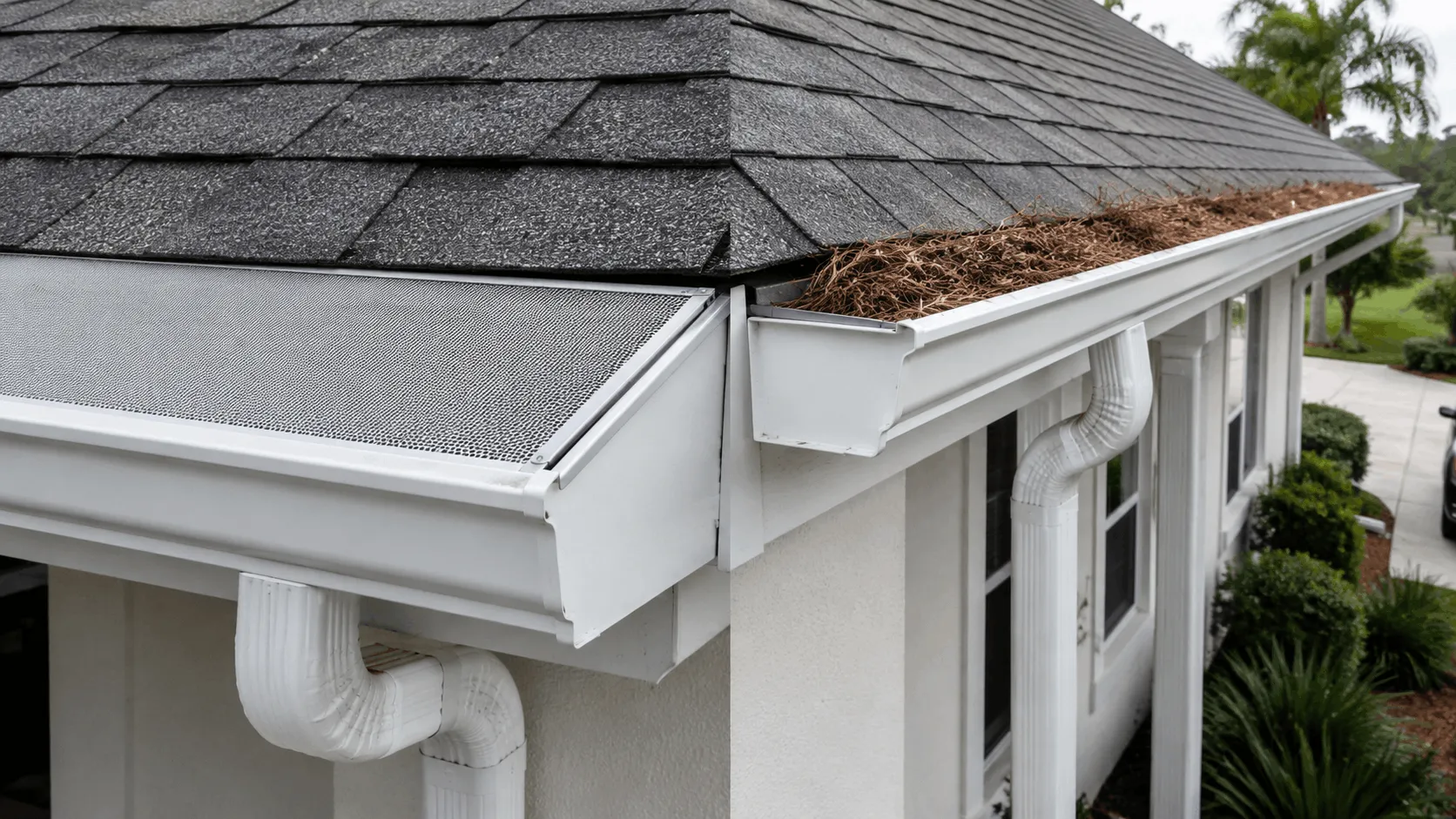
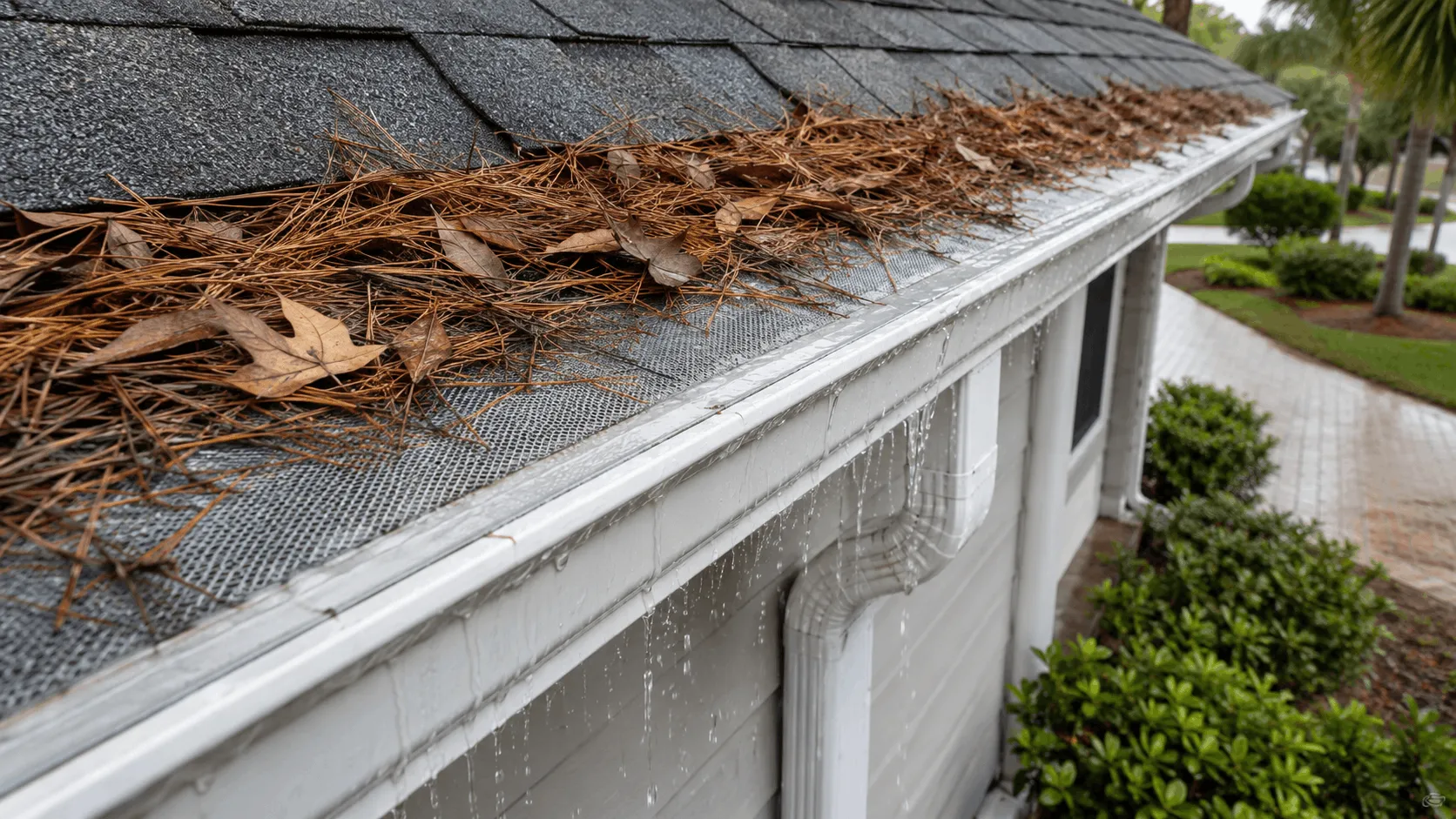
The best guard for a Florida property is decided by what falls on the roof, not by a general ranking. A guard that performs well under oak can struggle under pine, and one that copes with both may still be defeated by a roof valley dumping concentrated flow onto a short section.
So the useful starting point is a look upward: what species overhang the roofline, how close they sit, and whether the load is spread evenly or concentrated over one or two runs.
The main guard types, honestly compared
Five categories cover almost everything sold for residential gutters.
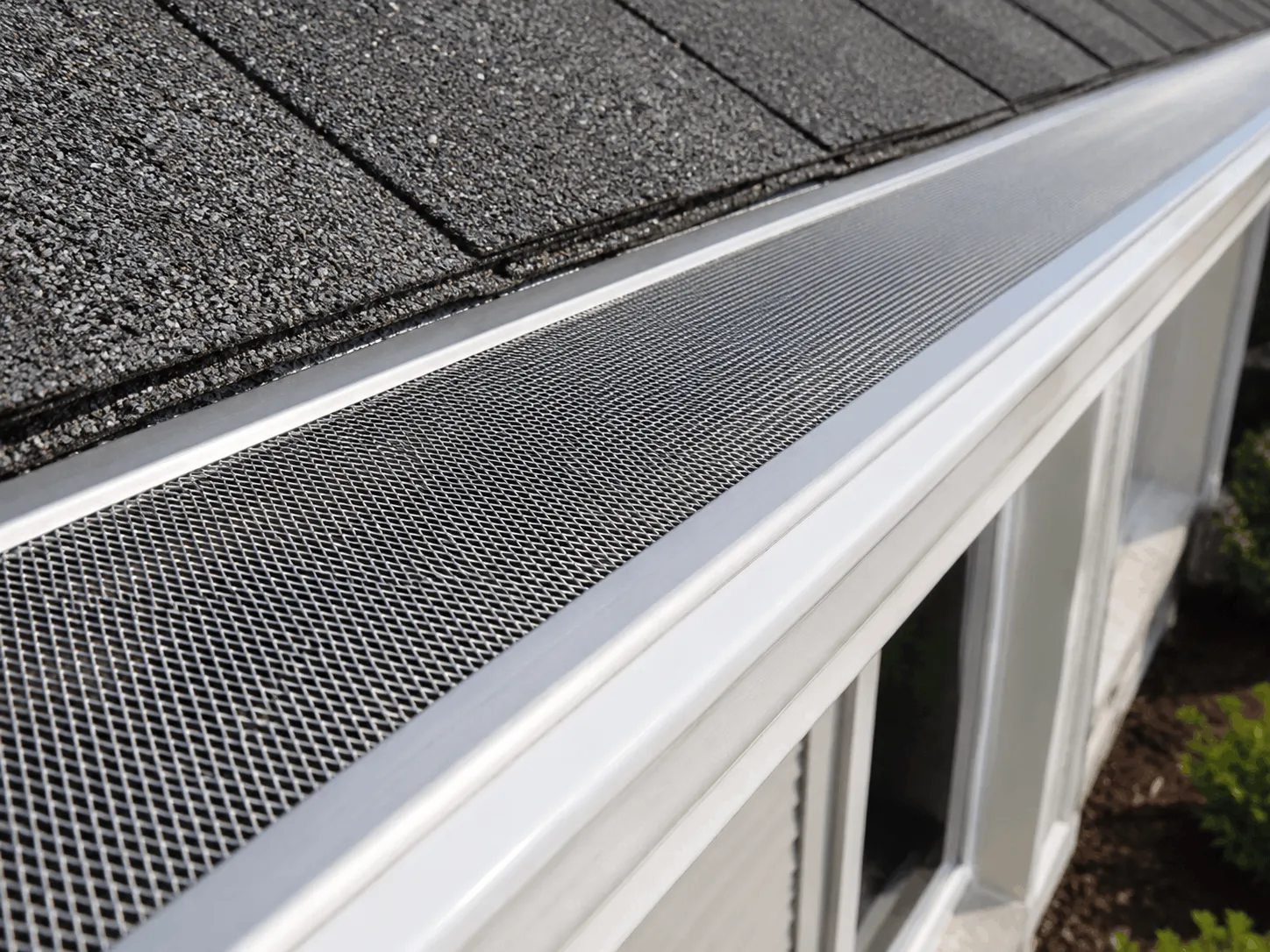
- Micro-mesh. Fine woven screen, usually stainless, on a rigid frame. The type that copes with pine straw. Highest material cost.
- Perforated metal. Stops larger debris reliably; smaller openings vary considerably, and fine material can still pass or lodge.
- Wide-gauge screen. Cheap and easy to fit, effective against big leaves and twigs, poor against needles and seed.
- Foam insert. Fills the gutter so debris sits on top. Retains moisture and organic material, and tends to need replacing.
- Reverse-curve. Water follows the curve into a slot. Performance is sensitive to the gap size and to how heavy the flow gets.
What separates a good installation from a good product
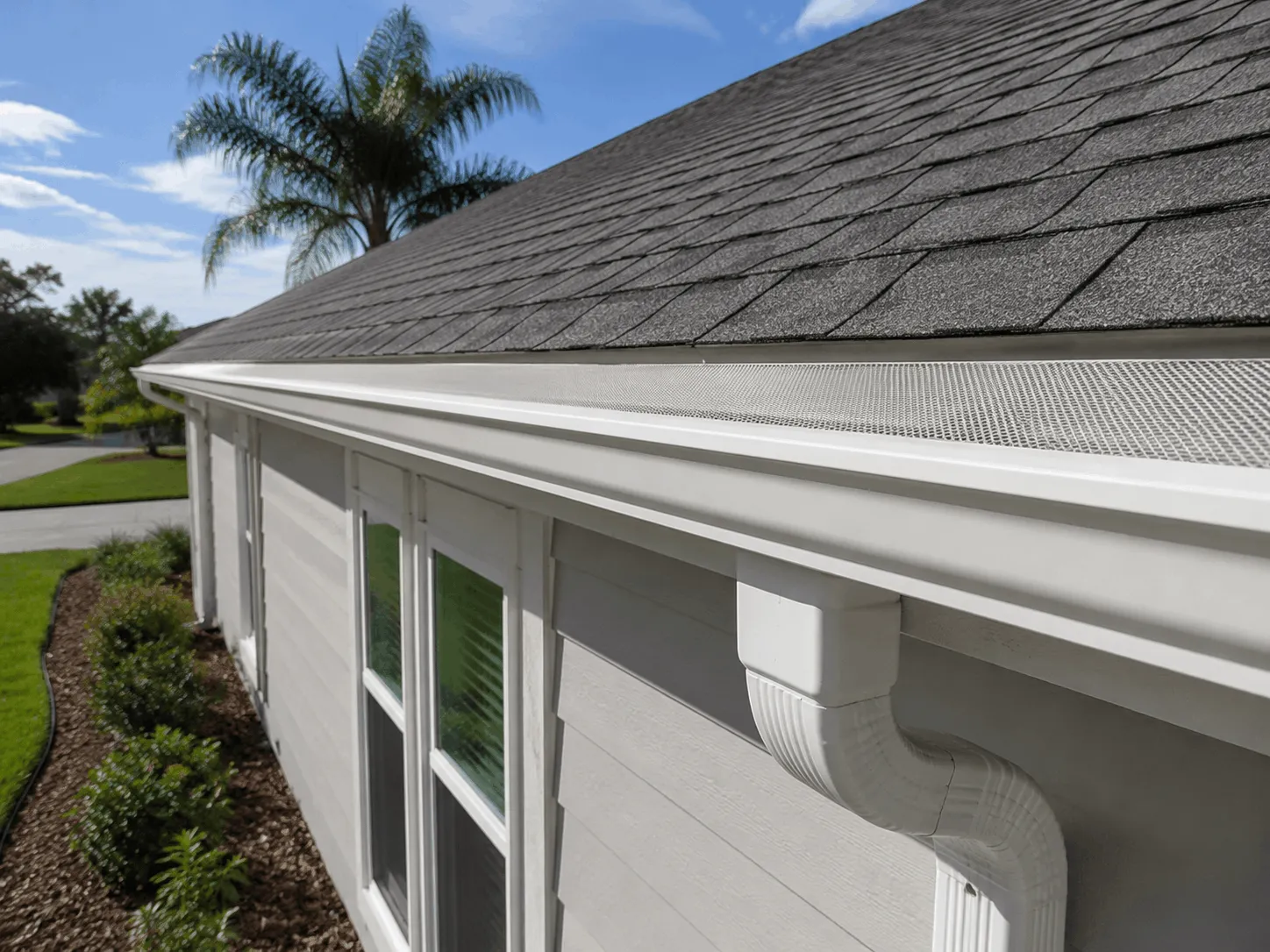
Guard performance is roughly half product and half fitting. A well-chosen mesh that is loosely fixed, laid over sagging gutters, or left with gaps at valleys and corners will underperform a modest product that is fitted properly.
The details worth asking about are how the guard is secured against wind lift, whether the gutters are cleared and adjusted first, how corners and valleys are treated, and whether sections can be lifted later for access without damaging the installation.
Florida conditions that change the ranking
Three regional factors push the decision away from national advice. Rainfall arrives in short intense bursts, so a guard that restricts flow becomes a liability precisely when the system is needed most. Pine straw is present across much of the Panhandle and is the hardest common debris to exclude.
On coastal properties, salt-influenced air makes material choice matter for the guard and its fasteners, not just for the gutter. A guard that corrodes at the fasteners will loosen long before the mesh itself gives up.
Questions worth asking any installer
Regardless of who fits them, these five questions separate a considered quote from a product pitch.
- What is the mesh and frame made of, and how is it fixed?
- Will the gutters be cleared, checked and repitched first if needed?
- How are roof valleys and corners handled?
- What maintenance should I still expect afterwards?
- Can a section be lifted later without damaging the system?
An installer who answers "none" to the maintenance question is overselling, whatever the product.
When guards are the wrong spend
Guards are not automatically the right recommendation. If the existing gutters are undersized, sagging or failing at the joints, that work comes first and may absorb the budget on its own.
If the roofline sits clear of overhanging canopy, a sensible cleaning interval may serve better than a guard system, and it is fair for a contractor to say so. We would rather quote the work that helps than the work that sells.
Getting a recommendation for your roofline
The right guard depends on the trees above the roof, the pitch, the valley layout and the condition of the current system. That is a property visit rather than a phone quote, and the assessment and written estimate are free.
How the types rank here
| Rank | Type | Why |
|---|---|---|
| 1 | Micro-mesh | Stops pine straw |
| 2 | Reverse curve | Better than screen, overshoots in heavy rain |
| 3 | Screen | Cheap, clogs on pine |
| 4 | Foam | Clogs and holds moisture |
Best for Florida means best against pine straw. That reorders every national list.
Common questions
What is the best gutter guard for Florida?
For most Panhandle properties with pine or mixed canopy overhead, a fine stainless micro-mesh in a rigid frame is the type that holds up best. Where canopy is light, the case for any guard weakens and regular cleaning may serve better.
Are cheap gutter guards worth trying first?
In pine areas they usually are not. Screen and foam tend to trap needles rather than exclude them, and the cost of removing or replacing a failed guard often exceeds the saving on the original purchase.
Do gutter guards work in heavy rain?
A clean guard on a correctly sized gutter handles heavy rain well. Problems usually trace to restricted flow through a fouled surface, undersized troughs, too few downspouts, or a valley concentrating a large roof area onto a short run.
Will guards stop me needing gutter cleaning entirely?
No. Guards reduce debris entry, but no system eliminates every maintenance need. Fine roof grit passes through most mesh, and the guard surface itself benefits from periodic checks.
Do guards need to match my gutter size?
Yes. The guard has to suit the gutter profile and width, and it should be fitted so the surface stays flat. A guard sized or fixed poorly will collect debris in the low spots it creates.