A straight answer
Yes, in the sense that a well-chosen guard fitted properly will keep most debris out of the gutter and reduce how often the gutters need clearing. No, in the sense that no guard makes gutters maintenance-free, and any product sold on that claim is overstating what it does.
The gap between those two statements is where most disappointment lives. Guards are a maintenance-reduction measure, not a maintenance-elimination one.
What determines whether they work for you
Four things account for most of the difference between a guard that satisfies and one that frustrates.
- Debris type. Pine straw is the hardest common debris to exclude. Guards rated against leaves may not cope with needles.
- Product choice. Aperture size, frame rigidity and fixing method matter more than brand.
- Installation quality. Wind fixing, valley treatment and corner detailing decide how the system behaves in a storm.
- The gutters underneath. A guard over a sagging, undersized or badly pitched gutter inherits every one of those problems.
What guards genuinely reduce
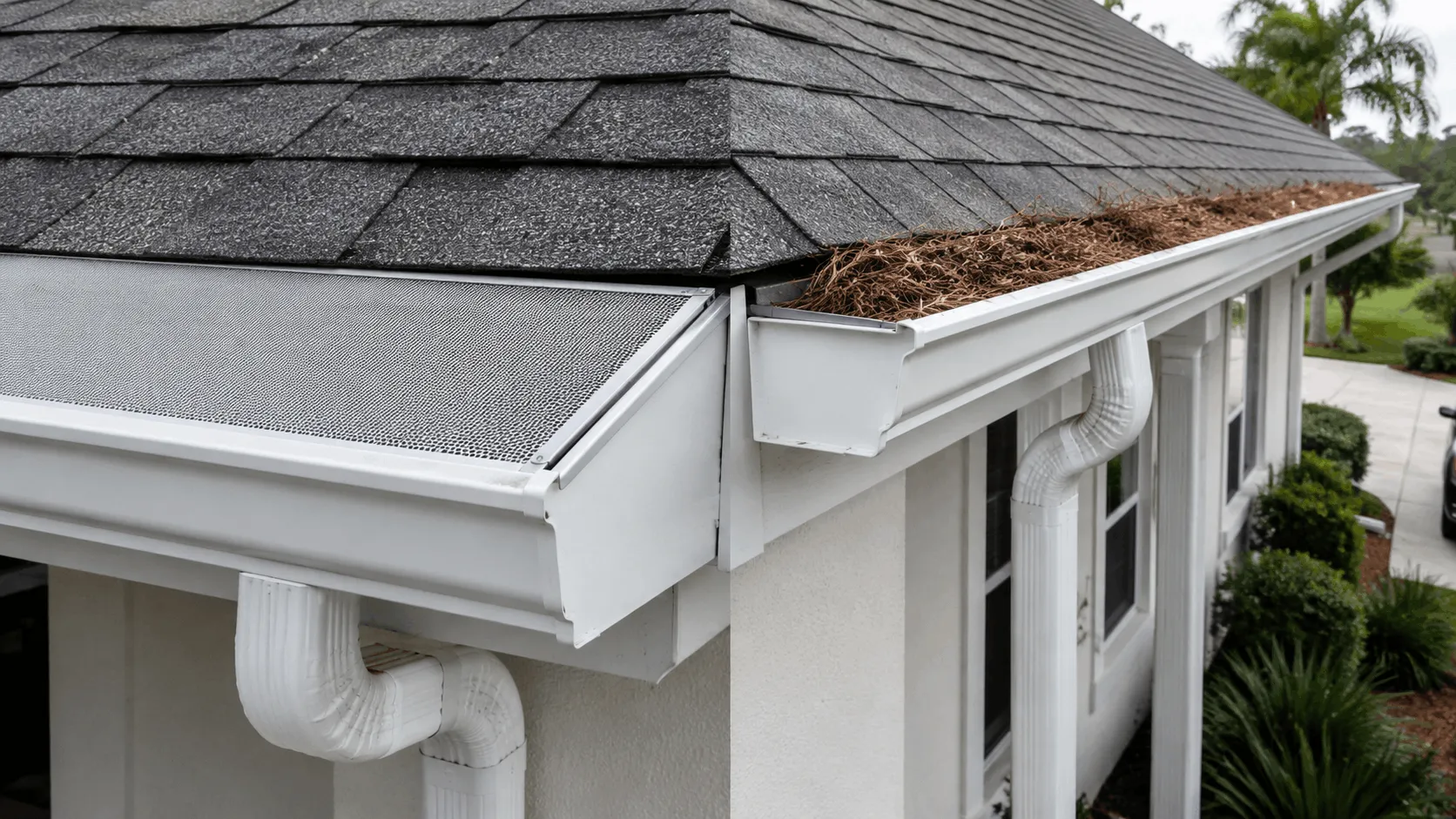
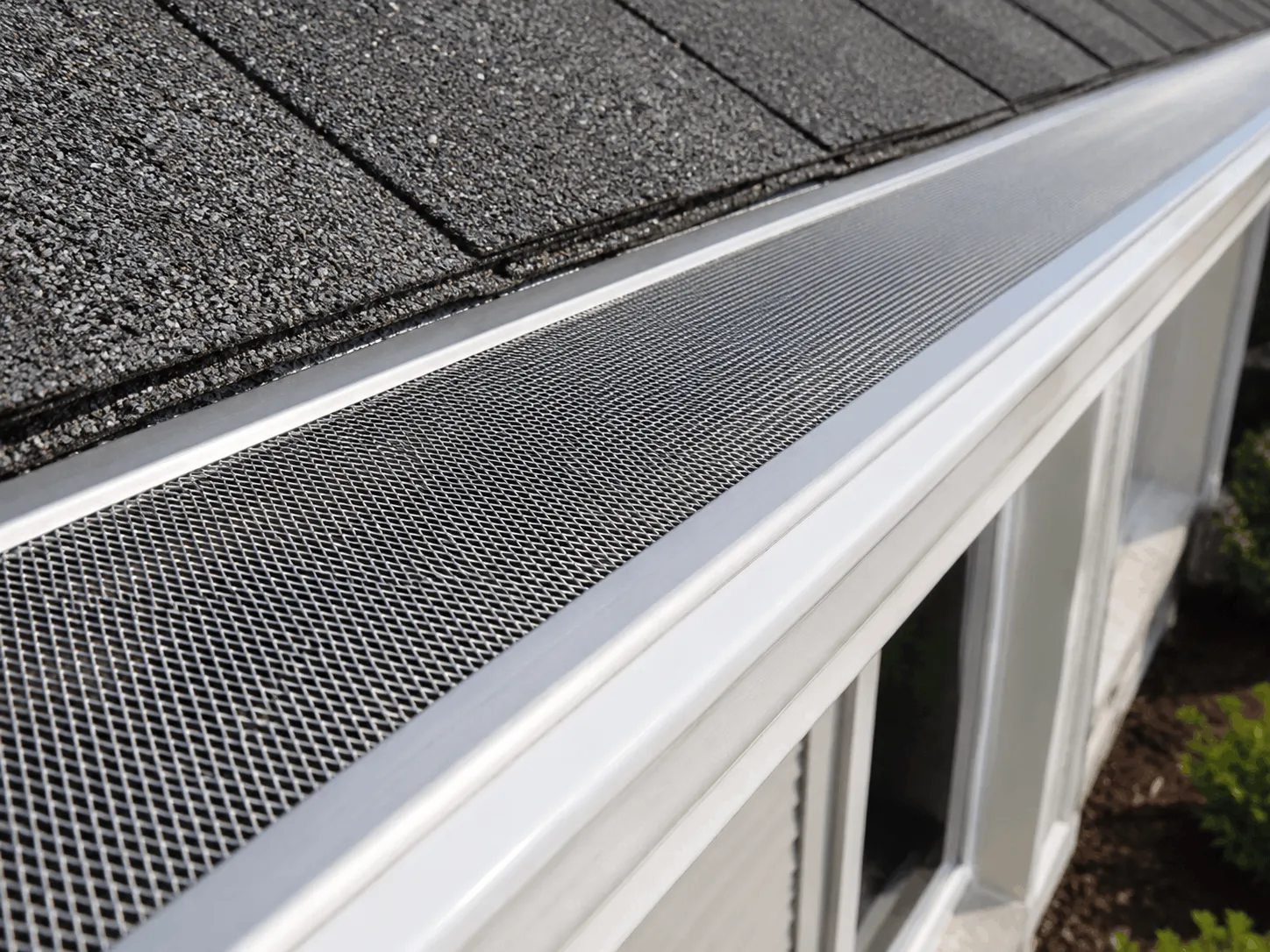
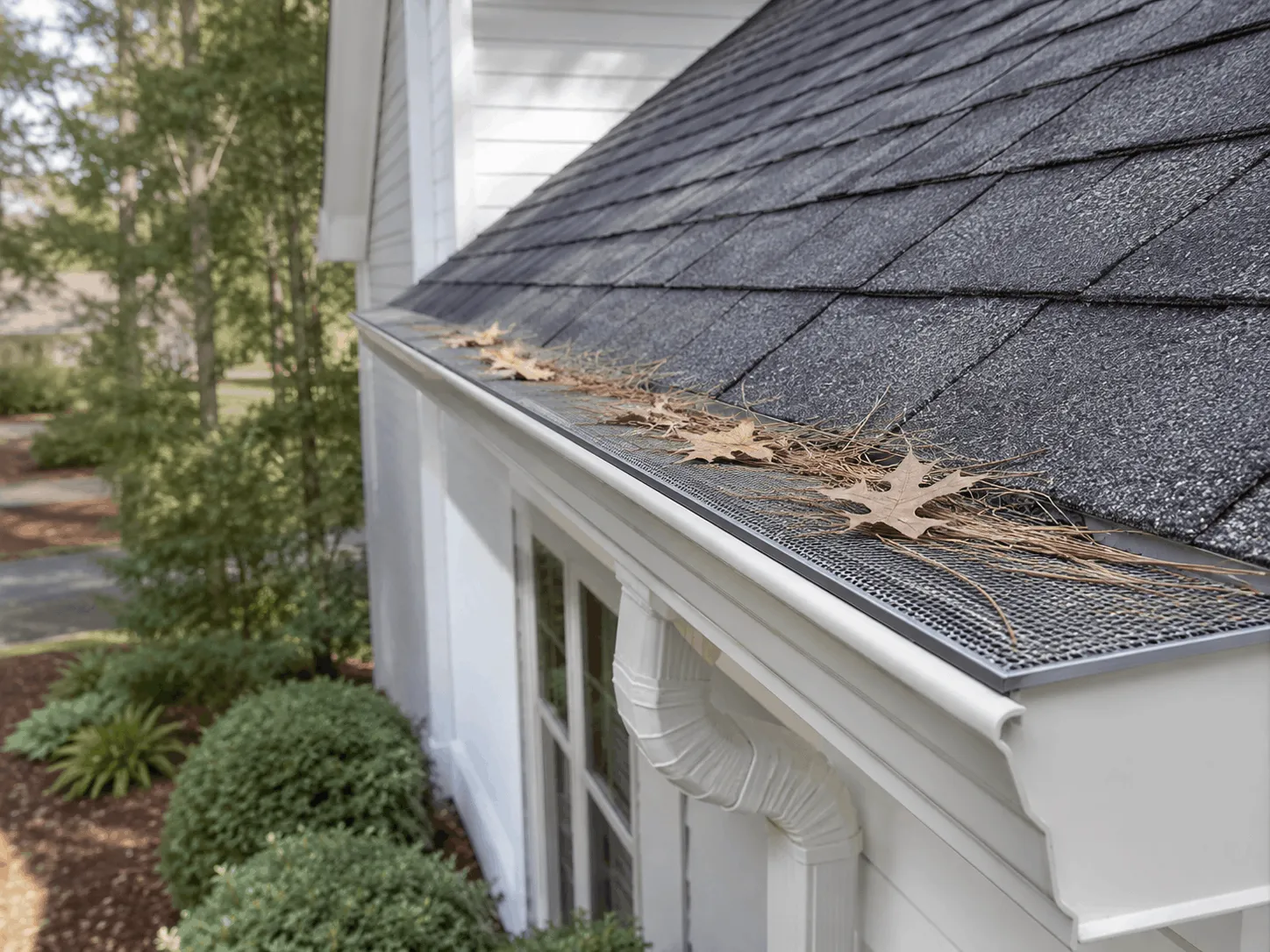
On a sound, correctly sized gutter, a quality micro-mesh keeps out leaves, twigs, acorns, seed pods and, importantly in this region, pine needles. That is the bulk of what fills a Panhandle gutter, and removing it changes the clearing interval substantially.
A covered trough also discourages nesting and reduces how much organic material sits holding moisture against the gutter and the fascia behind it. Those are real benefits even when the cost arithmetic is marginal.
What still gets through or around
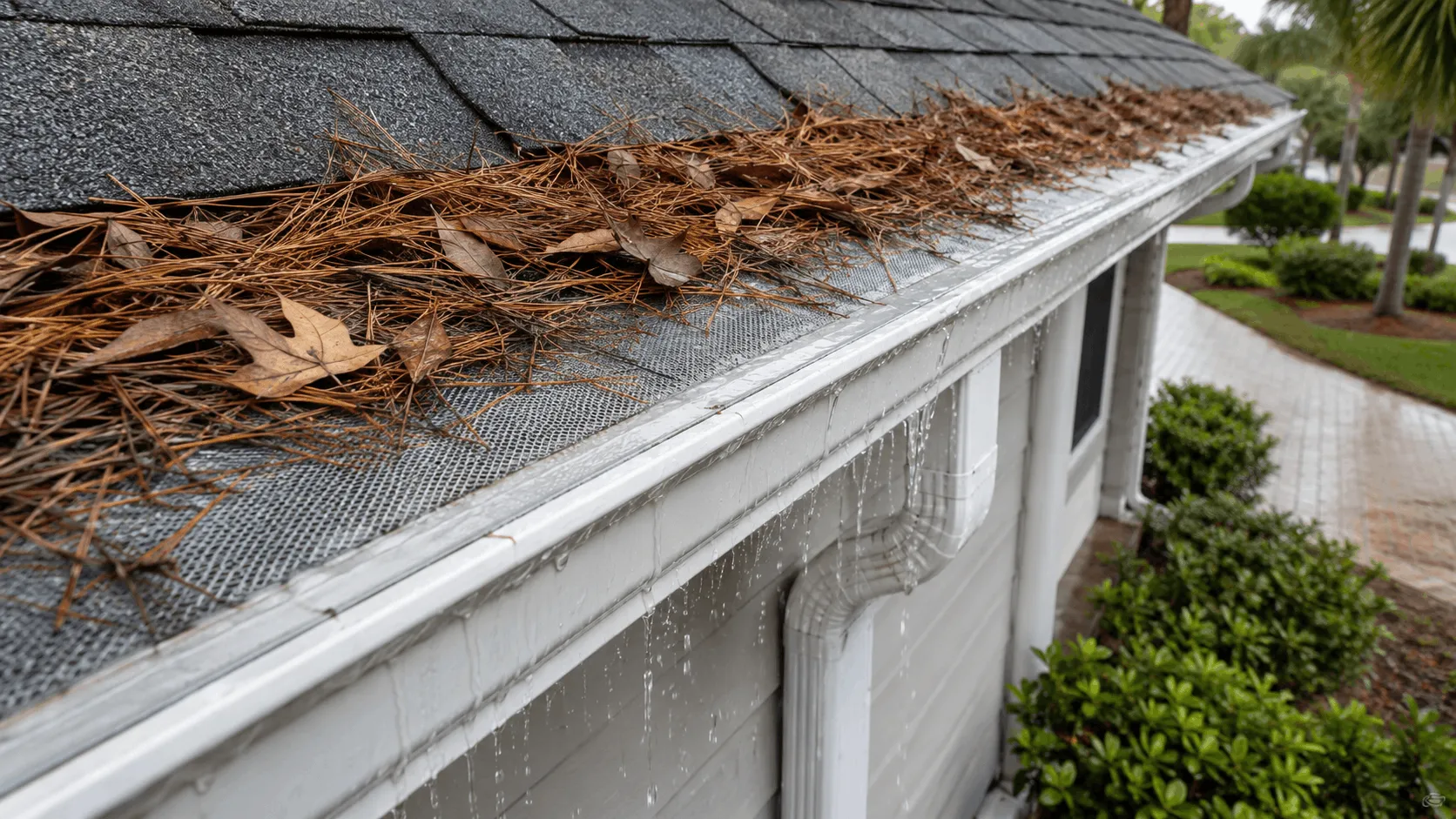
Fine grit shed by asphalt shingles is smaller than the mesh aperture on most guards and will pass through, accumulating slowly in the bottom of the gutter over years. Pollen and fine seed can form a film on the mesh surface until rain clears it.
Water can also bypass a guard entirely where a roof valley concentrates a large catchment onto a short run. In a heavy burst the flow can overshoot the guard and the gutter together, which is a sizing and downspout question rather than a guard failure.
Why some people conclude guards do not work
Most poor outcomes trace to one of three things: the wrong guard type for the debris, a guard fitted over gutters that already had problems, or an expectation that maintenance would stop entirely.
Foam and wide-gauge screen in pine country account for a lot of the disappointment specifically, because they trap needles rather than excluding them. The owner then has debris fixed in place and harder to remove than before, which understandably reads as the guard making things worse.
Setting a realistic expectation
A sensible expectation is that a good guard turns frequent full clearing into an occasional check. You should still expect someone to look at the system periodically, confirm the downspouts run freely, and clear whatever has settled on the mesh surface.
Framed that way, guards usually deliver. Framed as a permanent end to gutter maintenance, they always disappoint, regardless of price.
Working out whether they suit your roof
What is overhead, how the roof sheds into the gutters, and what condition the current system is in decide the answer. That assessment is part of a free written estimate, and where guards are not the right spend we will say so rather than quote them anyway.
Common questions
Do gutter guards really work?
A well-chosen guard, correctly fitted over sound gutters, keeps most debris out and substantially reduces clearing frequency. It does not remove maintenance entirely, and products sold on that promise overstate what they do.
Why do some people say gutter guards are a waste of money?
Usually because the wrong type was fitted for the debris, it was installed over gutters that already had problems, or it was sold as maintenance-free. Foam and wide screen in pine areas produce a lot of that experience.
Do guards work in heavy Florida rain?
A clean guard on a correctly sized gutter copes well. Overshoot in heavy bursts usually points to undersized troughs, too few downspouts, or a roof valley concentrating a large area onto a short section.
What still gets into gutters with guards fitted?
Fine shingle grit passes through most mesh apertures and builds up slowly. Pollen and fine seed can film the surface. Neither prevents the system working, but both are why periodic checks continue.
Can guards be removed if they do not suit the property?
A properly fitted system should allow sections to be lifted for access without destroying the installation. It is a fair question to ask before agreeing to any guard quote.