How micro-mesh actually works
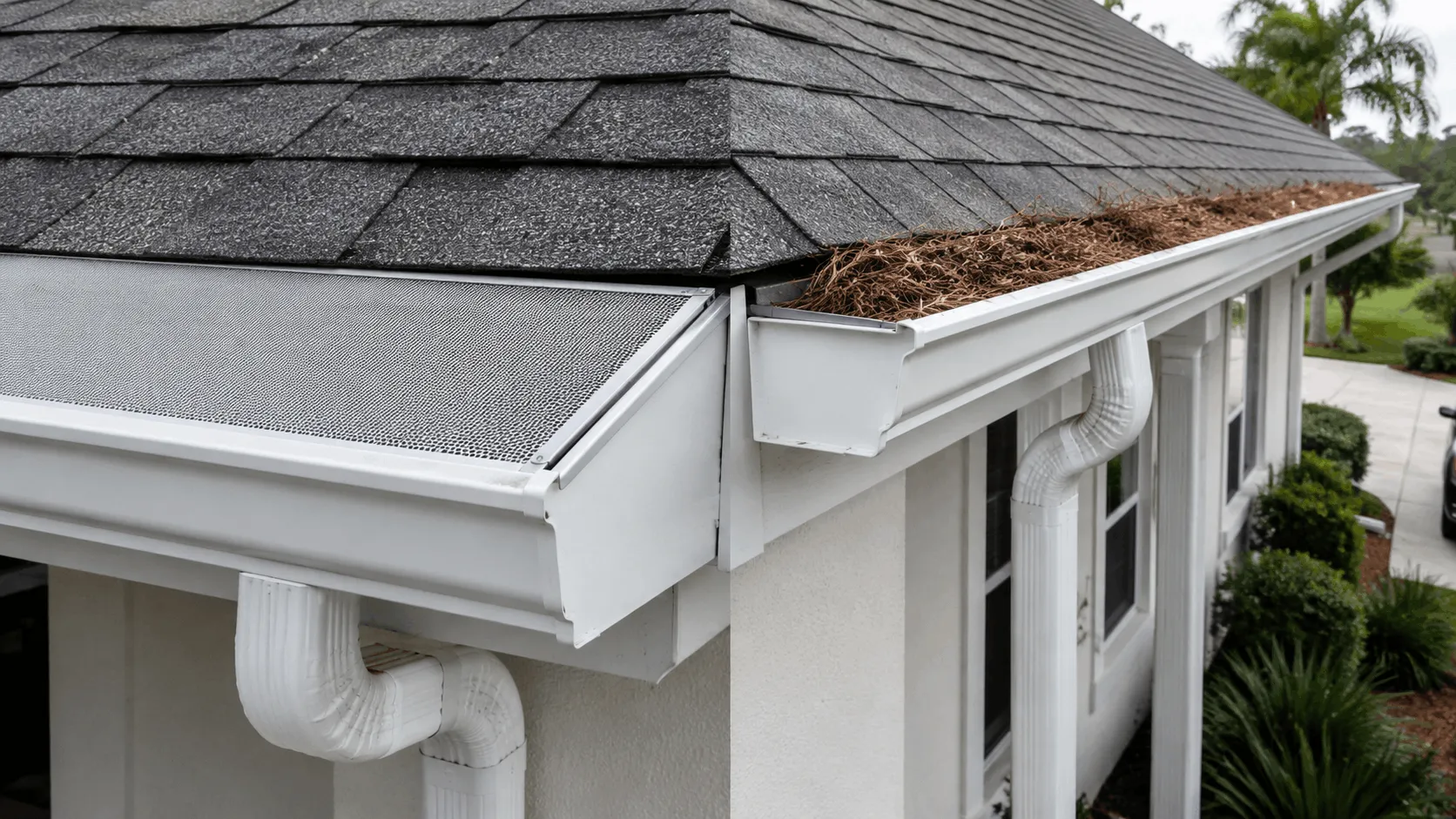
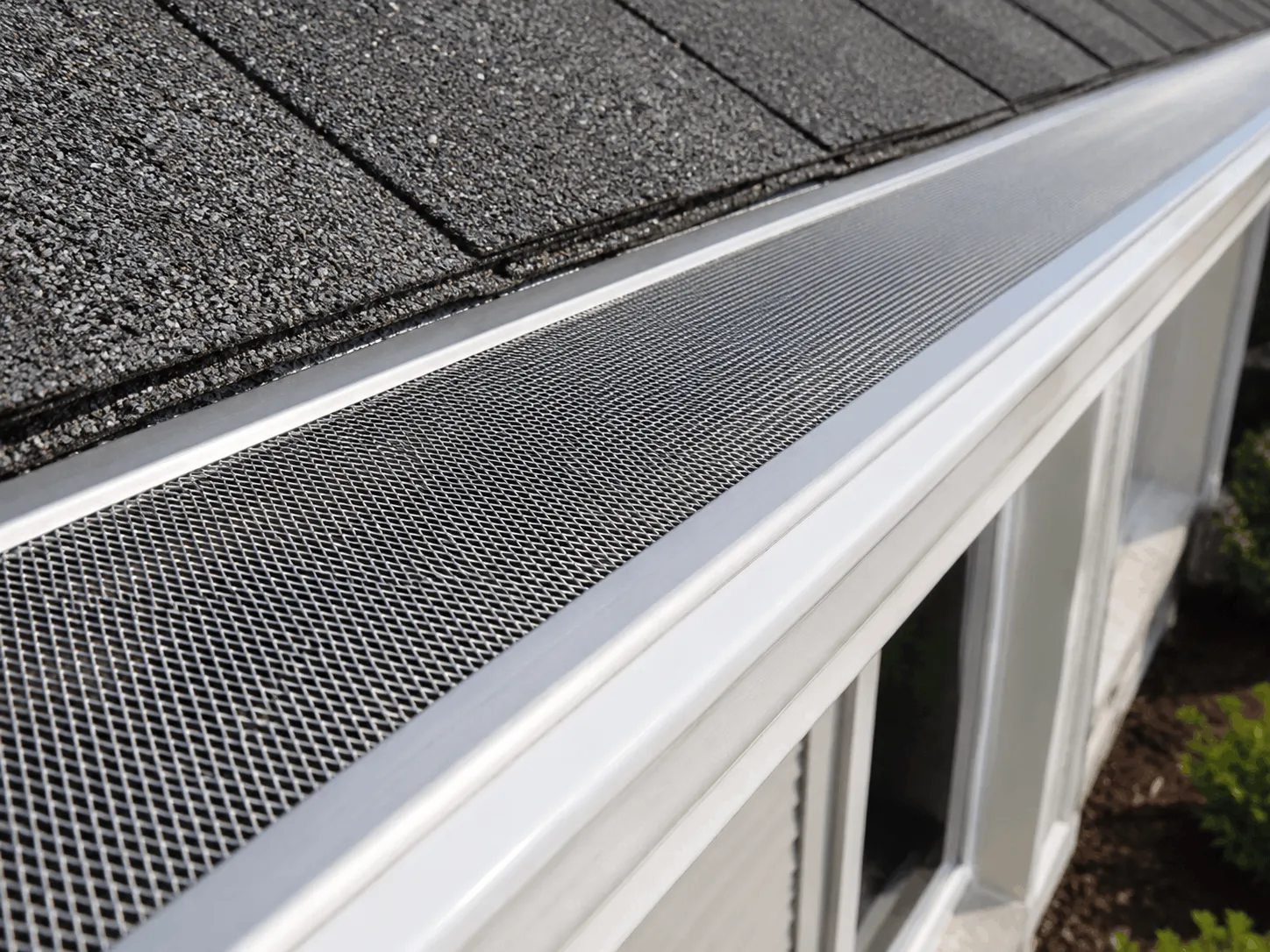
Micro-mesh guards use a fine woven screen, usually stainless steel, stretched over a rigid frame that sits across the gutter opening. Water passes through the mesh by surface tension and gravity while solid material stays on top, where wind and rain can move it off the edge.
The distinguishing feature is aperture size. Where a conventional screen has openings measured in millimetres, micro-mesh openings are fine enough to stop material as small as a pine needle or a seed casing. That is the whole reason it exists, and it is what separates it from the cheaper guard types.
Why aperture size matters so much here
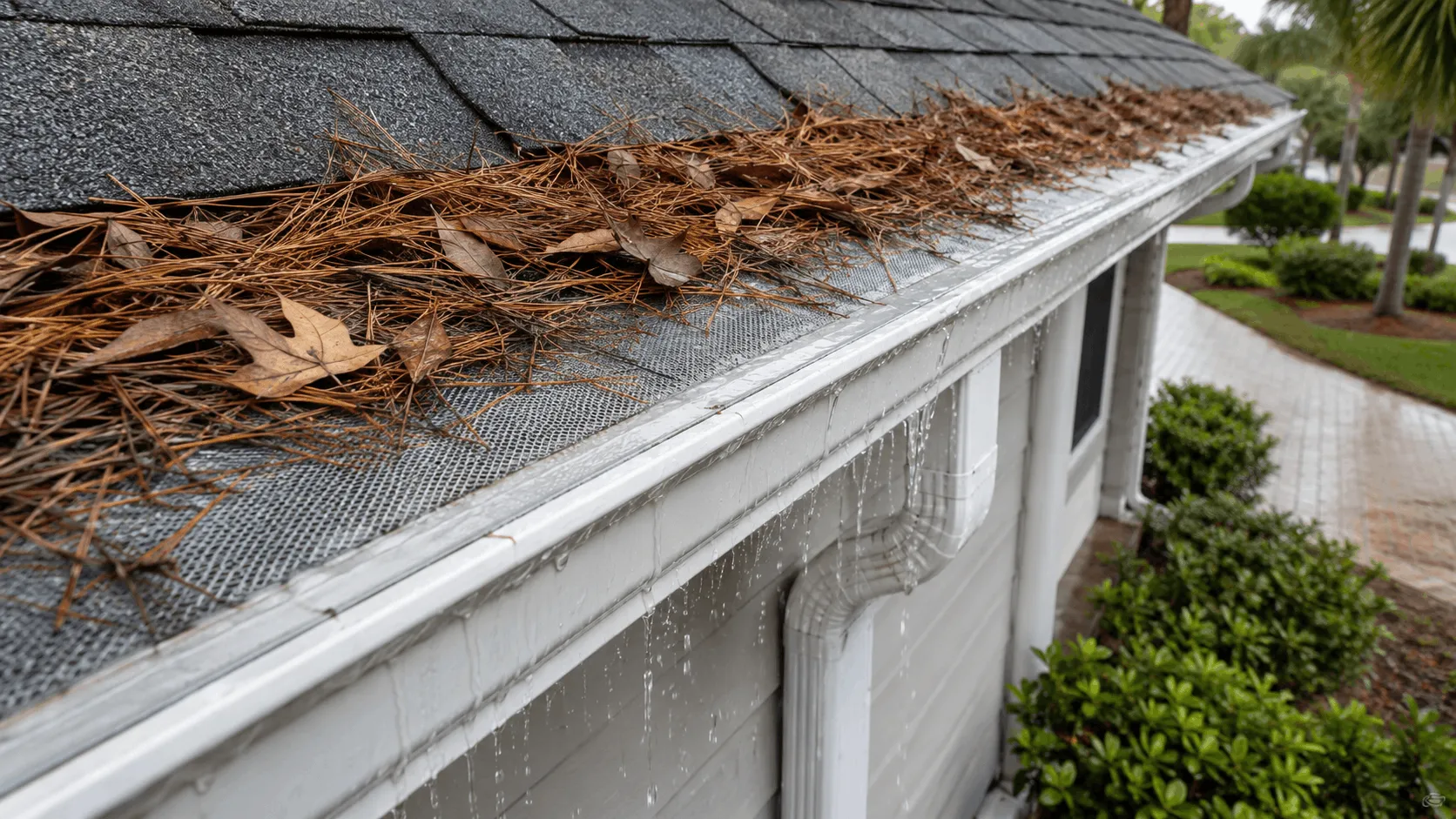
Longleaf and slash pine dominate large parts of the Florida Panhandle, and pine straw is the debris type that defeats most guards. A needle is narrow enough to pass through or wedge into an ordinary screen, and once a few dozen have lodged, they form a mat that catches everything after them.
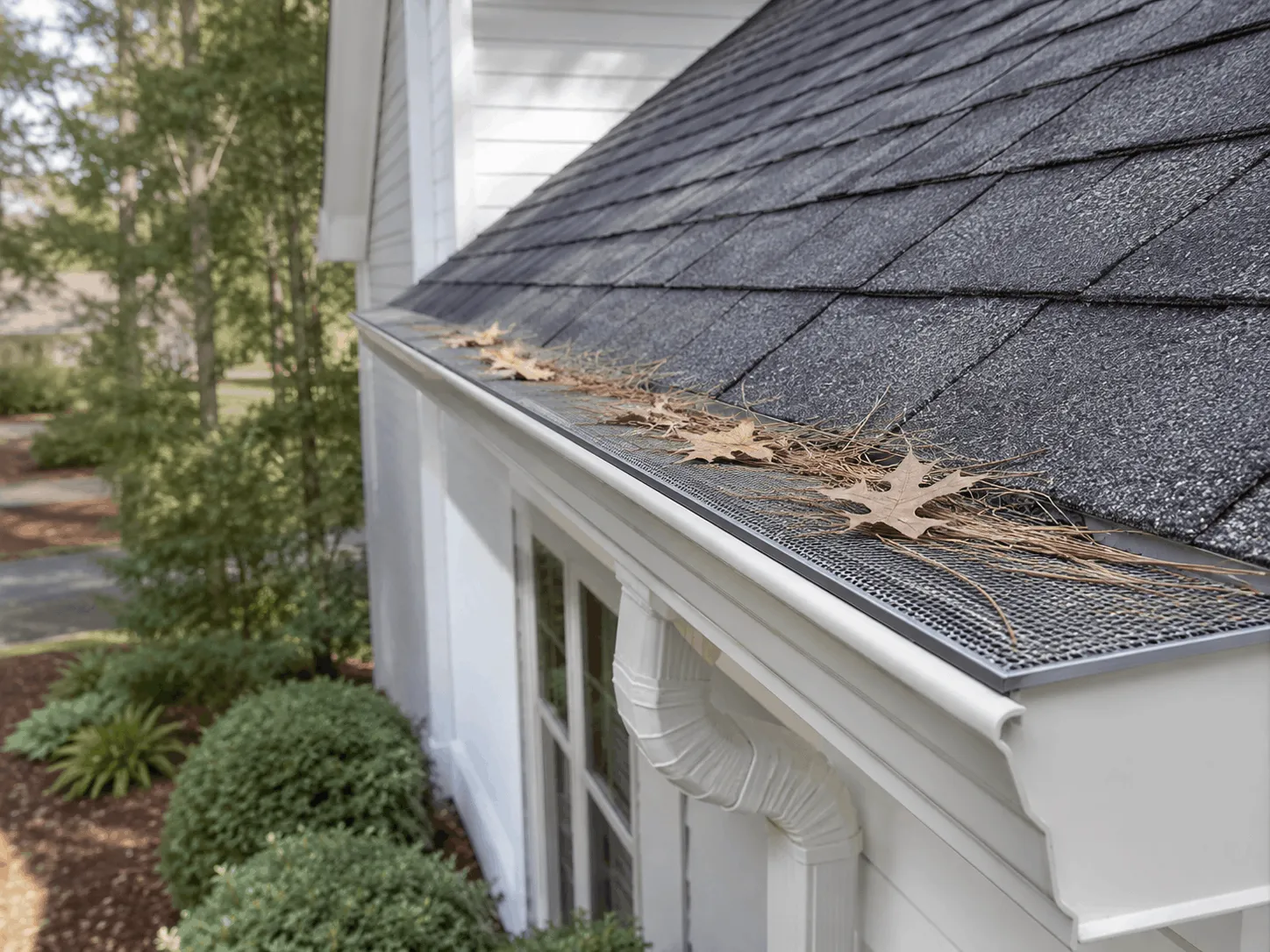
Micro-mesh does not give needles anywhere to enter. They sit on the surface as loose material rather than knitting into the openings, which is why a mesh that handles oak leaves comfortably can still fail on pine while a finer one does not.
Frame, fixing and why they matter
The mesh gets the attention, but the frame and the fixing determine how long the installation keeps working. A rigid frame holds the mesh flat so debris slides rather than pooling in a sag. A flimsy backing lets the surface dish, and anything that collects in that dish stays there.
Fixing method matters for wind. Guards that rely on friction or a simple lip can lift in storm conditions, and a lifted guard is worse than no guard because it creates a funnel straight into the gutter. Securing the guard properly is part of a correct installation, not an optional upgrade.
What micro-mesh handles well
On a correctly sized and pitched gutter, micro-mesh deals with most of what falls on a Panhandle roofline.
- Pine straw. The main reason to choose it over cheaper guard types in this region.
- Oak leaves and twigs. Larger debris sits on the surface and generally blows or washes clear.
- Acorns and seed pods. Too large to pass, and they tend to roll off a pitched surface.
- Nesting attempts. A covered trough is a far less attractive site for birds and wasps.
What it does not solve
Gutter guards reduce debris entry, but no system eliminates every maintenance need. Fine grit shed by asphalt shingles is smaller than the mesh aperture and will pass through, accumulating slowly in the gutter over years.
Pollen and fine seed fall can form a film on the mesh surface that reduces how freely water passes until rain clears it. Roof valleys that concentrate a large area of flow onto a short section of guard can overshoot in heavy rain regardless of what is fitted underneath. None of that makes micro-mesh a poor choice; it just means periodic checks continue.
Guards will not fix a bad gutter
A guard is only as good as the system beneath it. If the gutters sag between hangers, sit at the wrong pitch, are undersized for the roof area, or have failing joints, fitting a guard over the top locks those problems into a space that is now harder to inspect and reach.
That is why a proper guard job starts with clearing, checking and correcting the gutters. If we find the system underneath needs work first, we will say so before quoting the guards rather than after fitting them.
Deciding whether it suits your property
The question worth asking is what is actually overhead. Heavy pine or oak canopy over the roofline makes a strong case. A roof sitting clear of trees makes a much weaker one, and the honest recommendation in that situation may be to keep cleaning on a sensible interval instead. That assessment is part of a free estimate rather than a separate service.
Micro-mesh against other guards
| Type | Pine straw | Verdict |
|---|---|---|
| Screen | Passes through | Not for pine |
| Foam | Traps needles | Clogs |
| Reverse curve | Overshoots in heavy rain | Inconsistent |
| Micro-mesh | Blocked | Recommended |
The right question is not which brand, it is which aperture. Match it to pine straw and the rest follows.
Common questions
How does micro-mesh differ from a normal gutter screen?
Aperture size. A conventional screen has openings large enough for pine needles and fine debris to enter or lodge. Micro-mesh openings are fine enough to keep needles on the surface, which is what makes it viable in a pine-straw region.
Does micro-mesh restrict water flow in heavy rain?
A clean micro-mesh passes water well. Flow can be reduced where pollen or fine film has built on the surface, or where a roof valley concentrates a very large area of runoff onto a short section. Sizing and downspout placement matter as much as the guard.
Can micro-mesh be fitted to existing gutters?
Usually, provided the gutters are sound, correctly pitched and securely hung. If they are sagging, leaking or undersized, that is addressed first, because a guard makes the underlying problem harder to reach.
Do I still need to clean gutters with micro-mesh fitted?
Less often, but not never. Fine roof grit passes through most mesh and accumulates slowly, and the mesh surface itself benefits from a periodic check. Guards change the interval; they do not end maintenance.
Is micro-mesh the only guard you install?
It is the type we fit, because in this region the cheaper guard types tend to fail on pine straw and end up costing more over a few seasons than they save.