What gutters are being asked to do in a storm
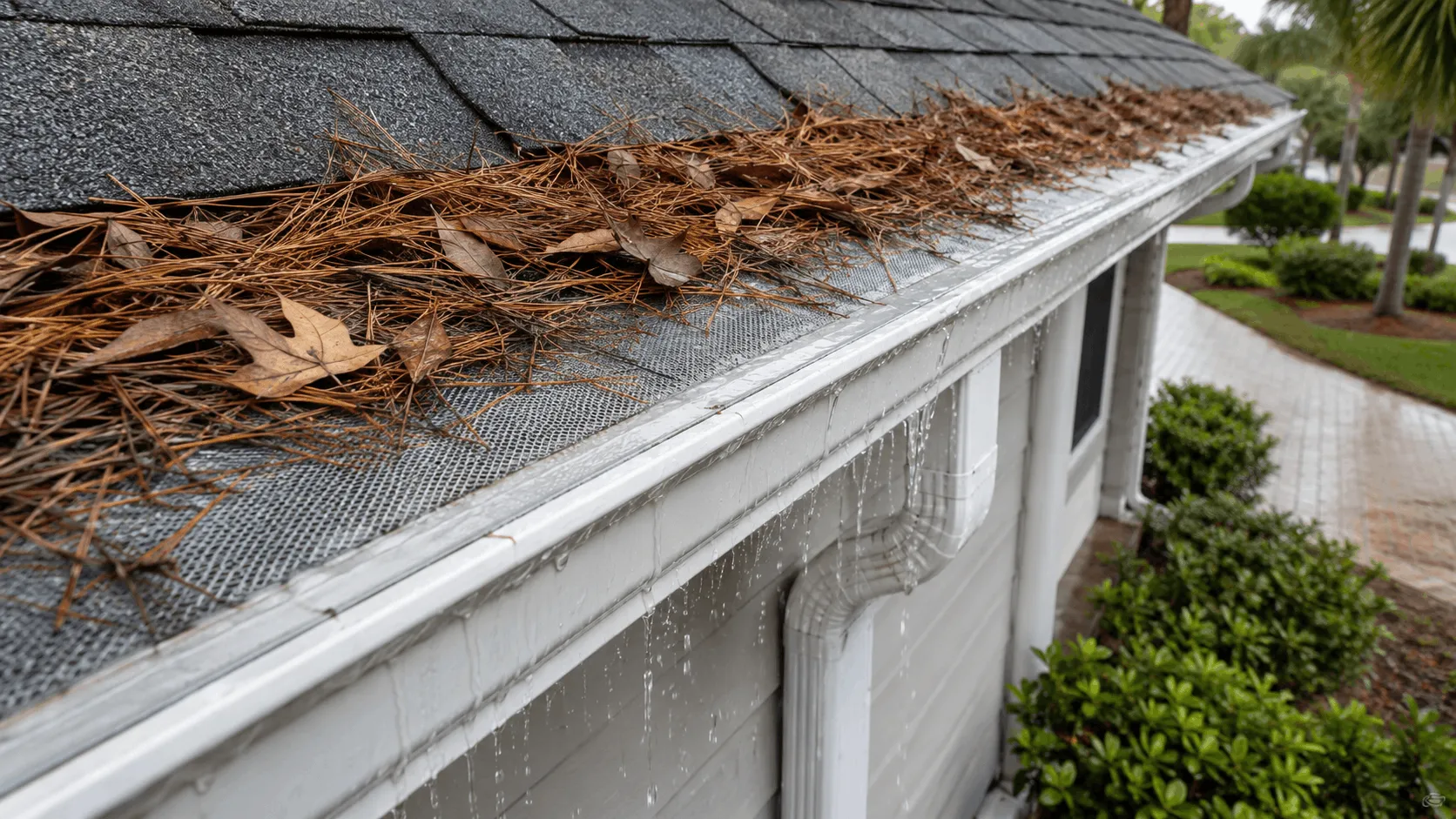
Hurricane season puts a different demand on a gutter system than ordinary rain. The volume arrives fast, wind drives water at angles the roofline was not shaped for, and debris can load a gutter in minutes rather than over a season.
Preparation is mostly about removing the failure points that only matter under that kind of load: blocked runs, loose fasteners, and discharge that leaves water where it can do harm.
Clear the runs and confirm the flow
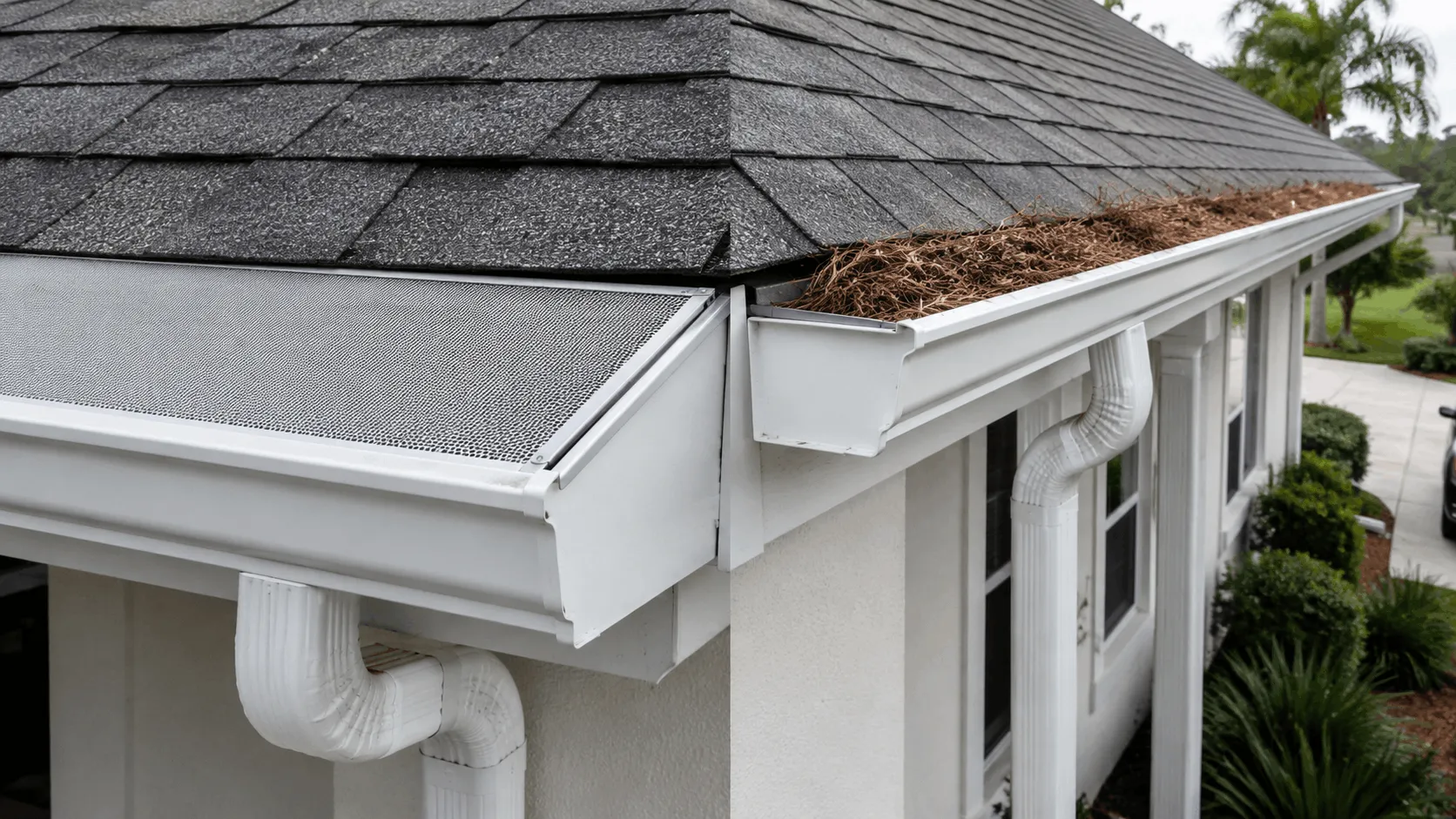
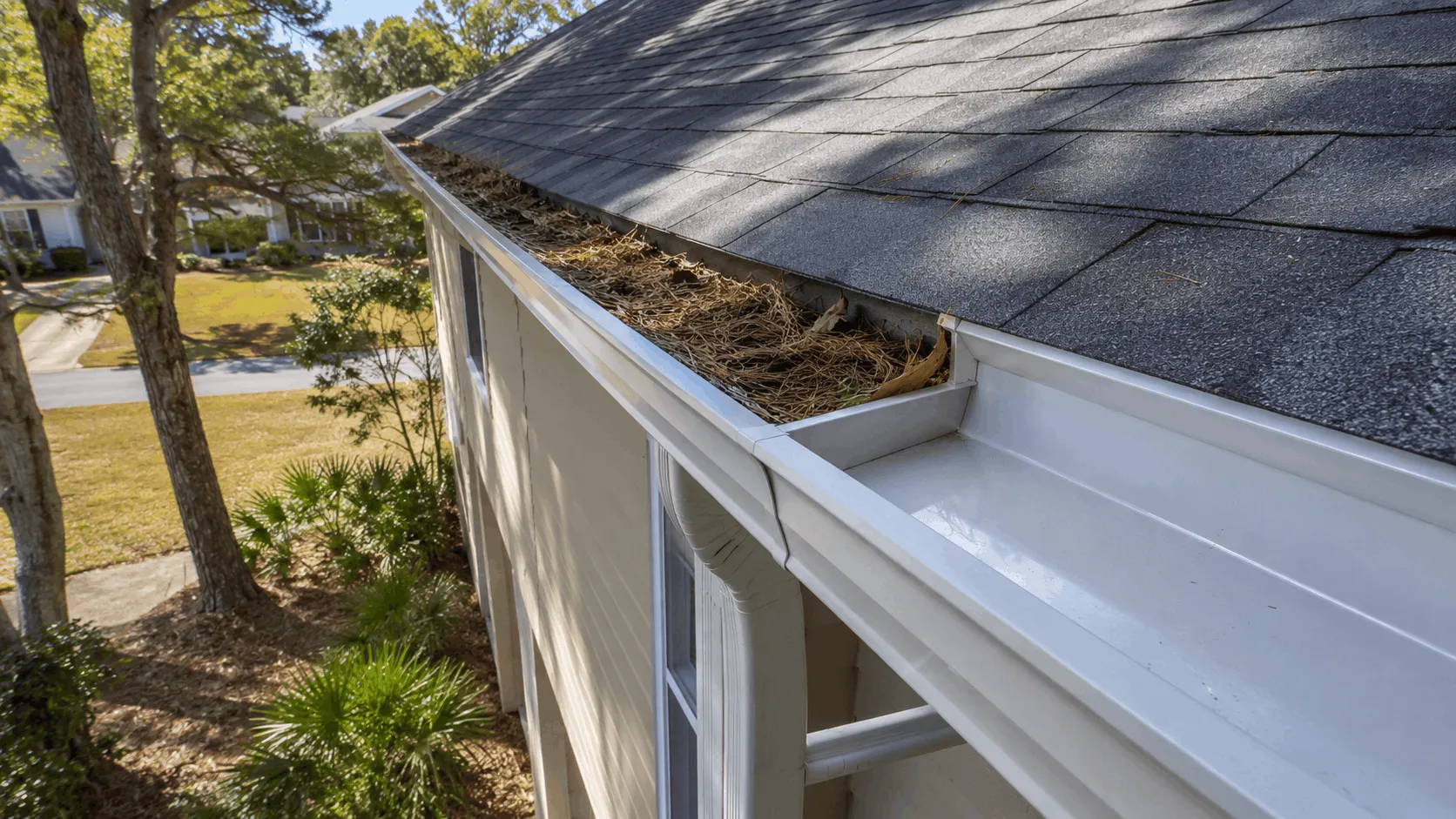
The first job is emptying the gutters, but the more important half is confirming water actually moves through the whole system afterwards. A clear gutter feeding a blocked downspout still overflows.
Water should be run through each downspout and seen discharging where it is supposed to. This is also the point at which a partial blockage further down an underground run tends to reveal itself, which is far better found in advance than during a storm.
Check the fasteners before the wind does
The parts most likely to fail under storm load are the ones holding everything up.
- Hangers and brackets. Look for spacing that has opened up, or a run sitting lower between two fasteners.
- Joints and end caps. Separation and sealant failure show as staining below the joint.
- Downspout straps. A downspout that can move in the wind works its own fasteners loose.
- Fascia condition. Soft or rotted board will not hold a hanger under load, no matter how good the gutter is.
A run that is already sagging in calm weather is the run most likely to come away in a storm.
Follow the water away from the building
Getting water off the roof is only half the system. Where it lands matters just as much, and it is the part most often left unfinished.
Check that extensions are still attached and pointed away from the structure, that discharge is not aimed at a neighbor or a path, and that the ground below is not already saturated or eroded. Splash blocks that have shifted over months are a common and easily fixed problem.
Clear what will become debris
Overhanging branches that are fine in ordinary weather become the debris that blocks the system, and in severe conditions the impact damage that opens it up. Trimming back what sits directly over the roofline is preparation as much as gutter work is.
The same applies to loose material on the roof itself. Anything sitting in a valley or against a chimney will be moved by wind and rain, and it usually ends up at the gutter line.
What to look at after a storm
A short check afterwards is worth as much as the preparation before it.
- Debris load in the gutters, which can be substantial after a single event.
- Runs that have shifted, dropped or pulled away from the fascia.
- Downspouts that have come loose or separated at a joint.
- Extensions and discharge points moved out of position.
- Signs of water having run behind the gutter and down the wall.
A realistic note on what preparation achieves
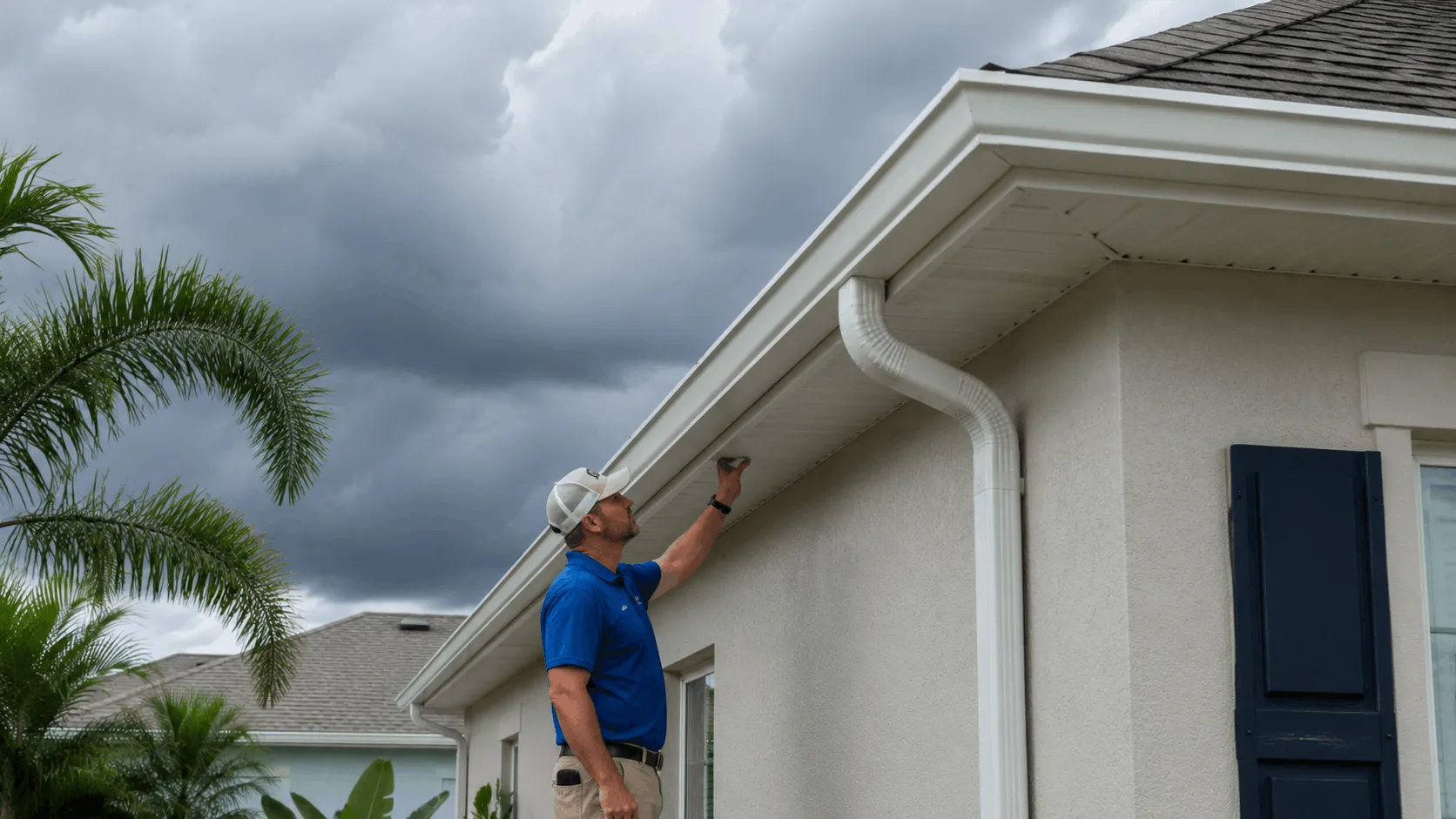
None of this makes a gutter system storm-proof, and it would be dishonest to suggest otherwise. Severe wind damages sound installations. What preparation does is remove the ordinary, avoidable failures, so that if something does give way it is because the weather was exceptional rather than because a downspout was blocked. If you want the system checked before the season, the assessment and written estimate are free.
Common questions
When should gutters be prepared for hurricane season?
Late spring, before the heaviest rainfall period begins, is the most useful timing for most Panhandle properties. That leaves the system clear going into the months when it is most likely to be tested.
What is the most important pre-season gutter check?
Confirming water runs the whole way through: troughs clear, downspouts free, and discharge landing away from the building. A clear gutter feeding a blocked downspout still overflows.
Should gutters be removed before a hurricane?
No. A properly fixed gutter system should stay in place. Removing sections leaves the roof edge and fascia exposed and creates loose material of its own.
What should I check after a storm?
Debris load in the gutters, runs that have dropped or pulled away, loose or separated downspouts, extensions moved out of position, and any sign that water has run behind the gutter and down the wall.
Can gutters be made storm-proof?
No, and any claim otherwise is worth treating carefully. Severe wind damages sound systems. Preparation removes the avoidable failures rather than guaranteeing the system survives.