What counts as a commercial gutter repair
A repair fixes a fault in a gutter system that is otherwise sound. On offices, shops, restaurants, warehouses, churches, community buildings and apartment property, the faults are the same list you would see on a house. Most of our repair work is on gutters someone else put up, so it does not matter who installed the building’s system.
- Leaking seams and corners
- Sagging runs and dropped sections
- Loose or missing hangers
- Gutters pulling away from the roof edge
- Split or cracked lengths
- Downspouts knocked loose or disconnected
- Blocked outlets and elbows
- Storm damage
A repair is usually the right call when the run is sound and the fault is in one or two spots. Replacement is the better spend when the gutters are rusted through, sagging along most of the length, or pulling away in several places. The same test decides gutter repair or replacement on a house.
Why commercial gutters work harder
A larger roof sheds more water in the same rain. Commercial buildings usually need bigger gutters than a house, and the right size depends on how much roof feeds each run.
On commercial buildings the volume is higher, so downspout count and placement matter more. We keep discharge away from entrances, parking bays and walkways, and moving a downspout so it empties away from a door is part of our downspout and drainage work.
Signs you can see from the ground
These show up during or just after rain, and they are worth mentioning when you call:
- Water spilling over the edge during ordinary rain, not only in a downpour.
- Water across an entrance, walkway or parking area where a downspout empties in the wrong place.
- A downspout hanging loose or come apart at a joint or bracket.
- Puddles or washed-out soil at the bottom of a downspout.
- Staining down the wall below a gutter or beside a downspout.
- Dripping from a seam or corner after the rain has stopped.
- A section that dips or has pulled away from the roof edge.
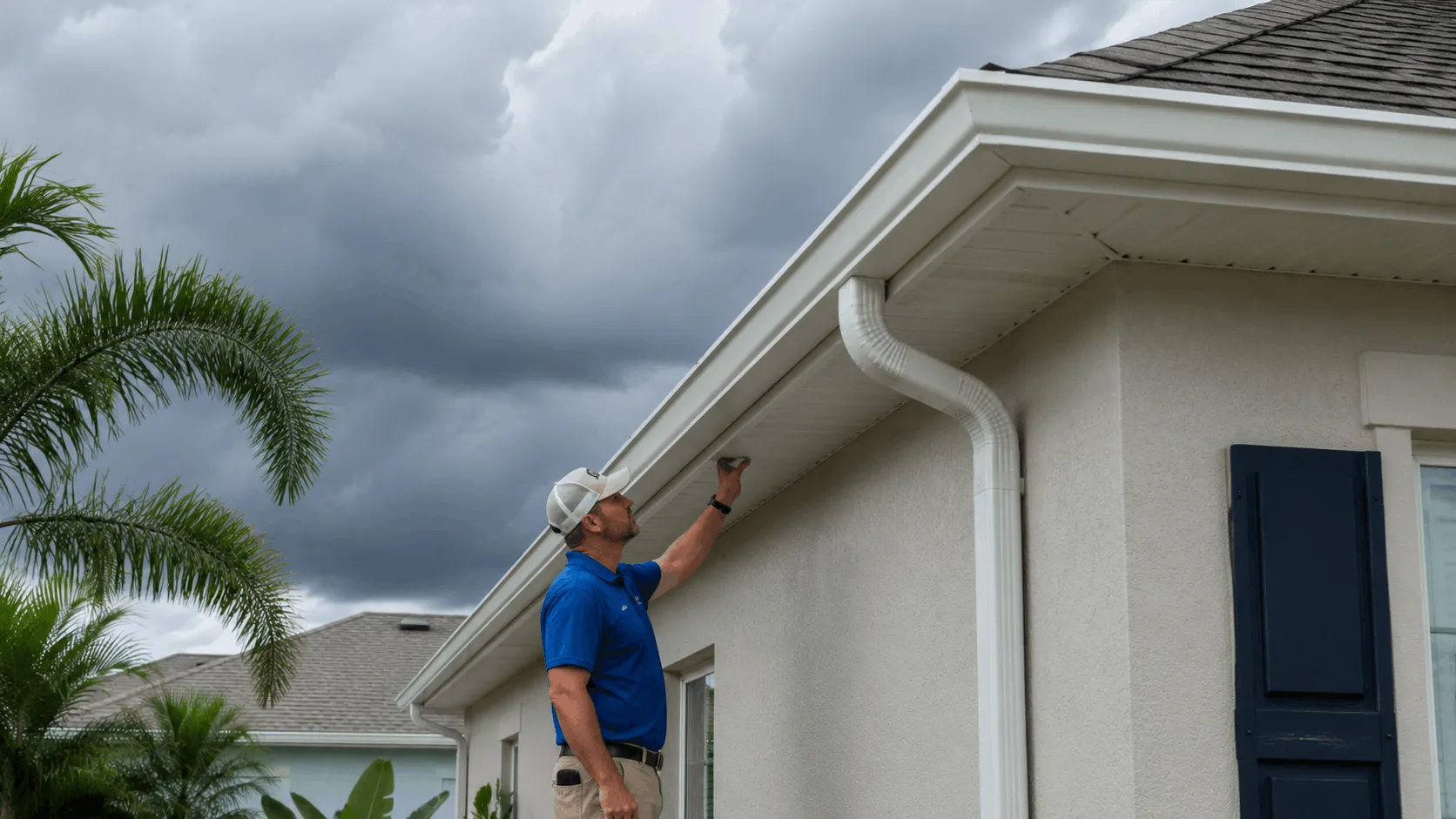
Tell us what you have noticed and where it is on the building, and we will come out and look at it.
How repair work is planned around a business
Commercial gutter work happens next to customers, staff and deliveries, so access and timing are agreed before the crew arrives. Early mornings, quiet days and out-of-hours work are all options.
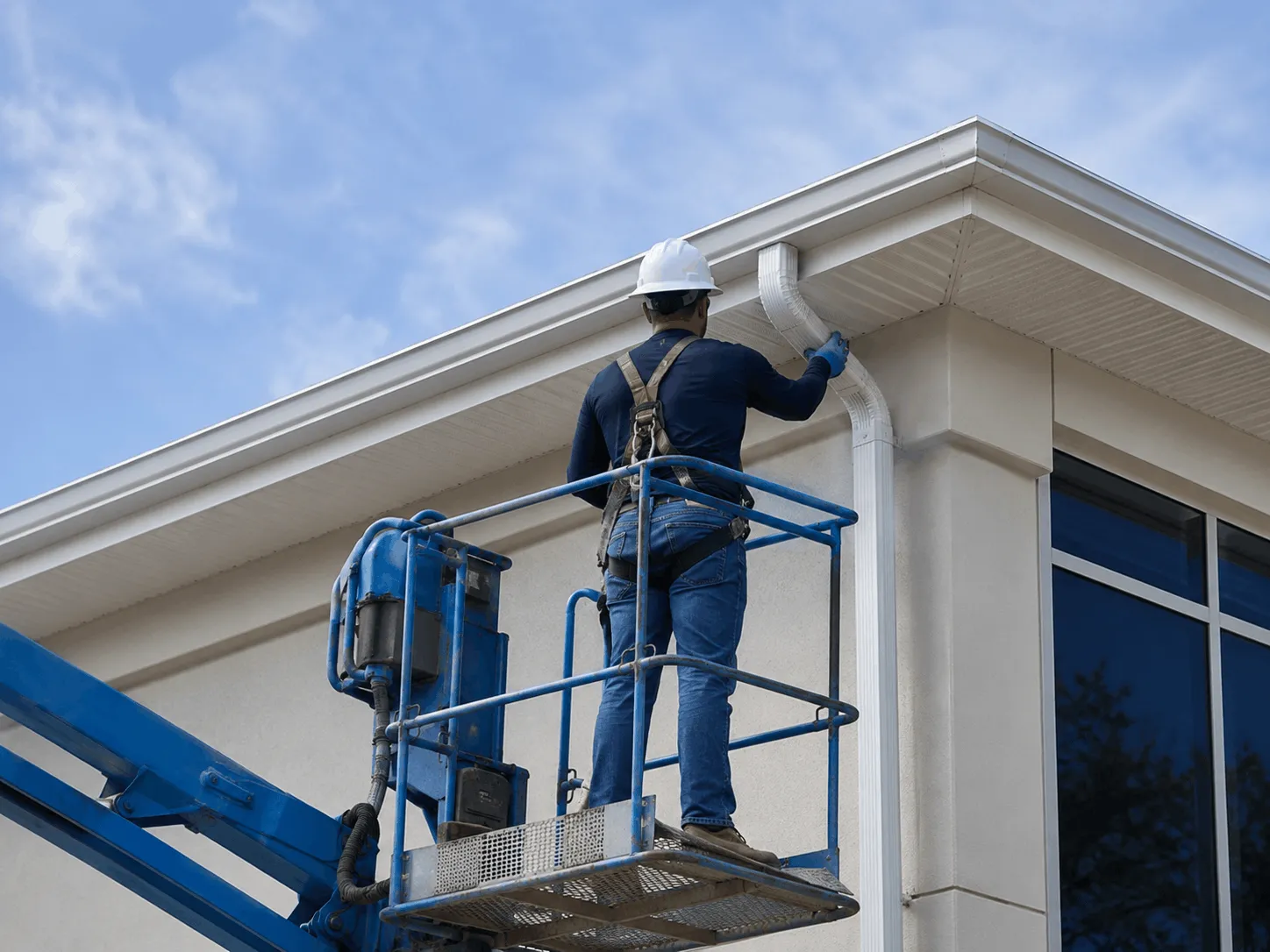
Where the roof edge is high or hard to reach, the equipment is planned in advance. Parking lots, loading bays and customer entrances stay usable while the work is done.
Landlords and property managers can have several addresses looked at on one visit. A site with more than one building is quoted as a whole, and the work on a large site can be split into phases if that helps the budget.
Storm damage on commercial property
When a storm damages the gutters on a commercial building, we reattach sections knocked loose, replace damaged lengths and reconnect downspouts. If the building is part of an insurance claim, we can provide a written quote for the claim.
Keeping outlets and elbows clear
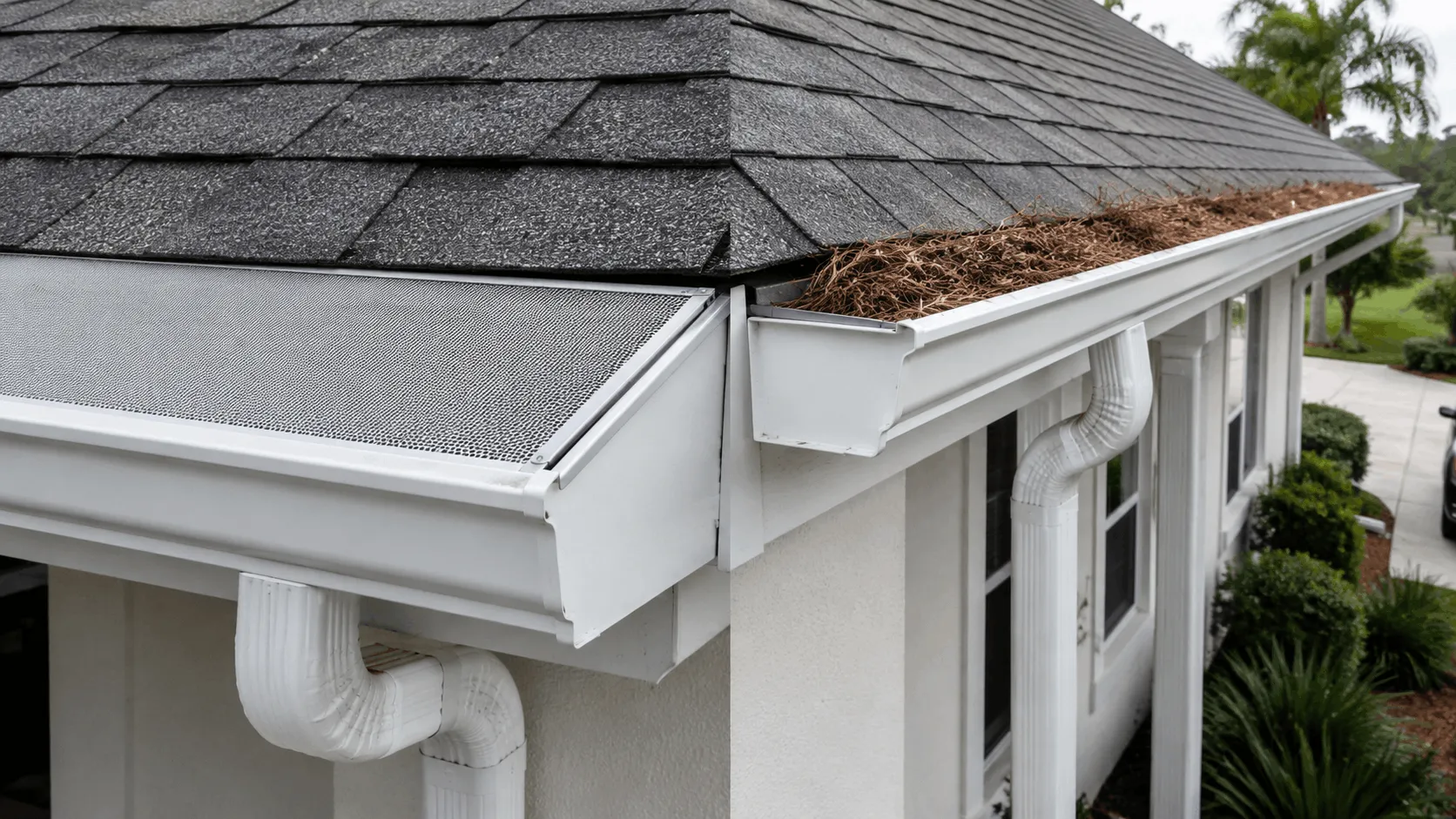
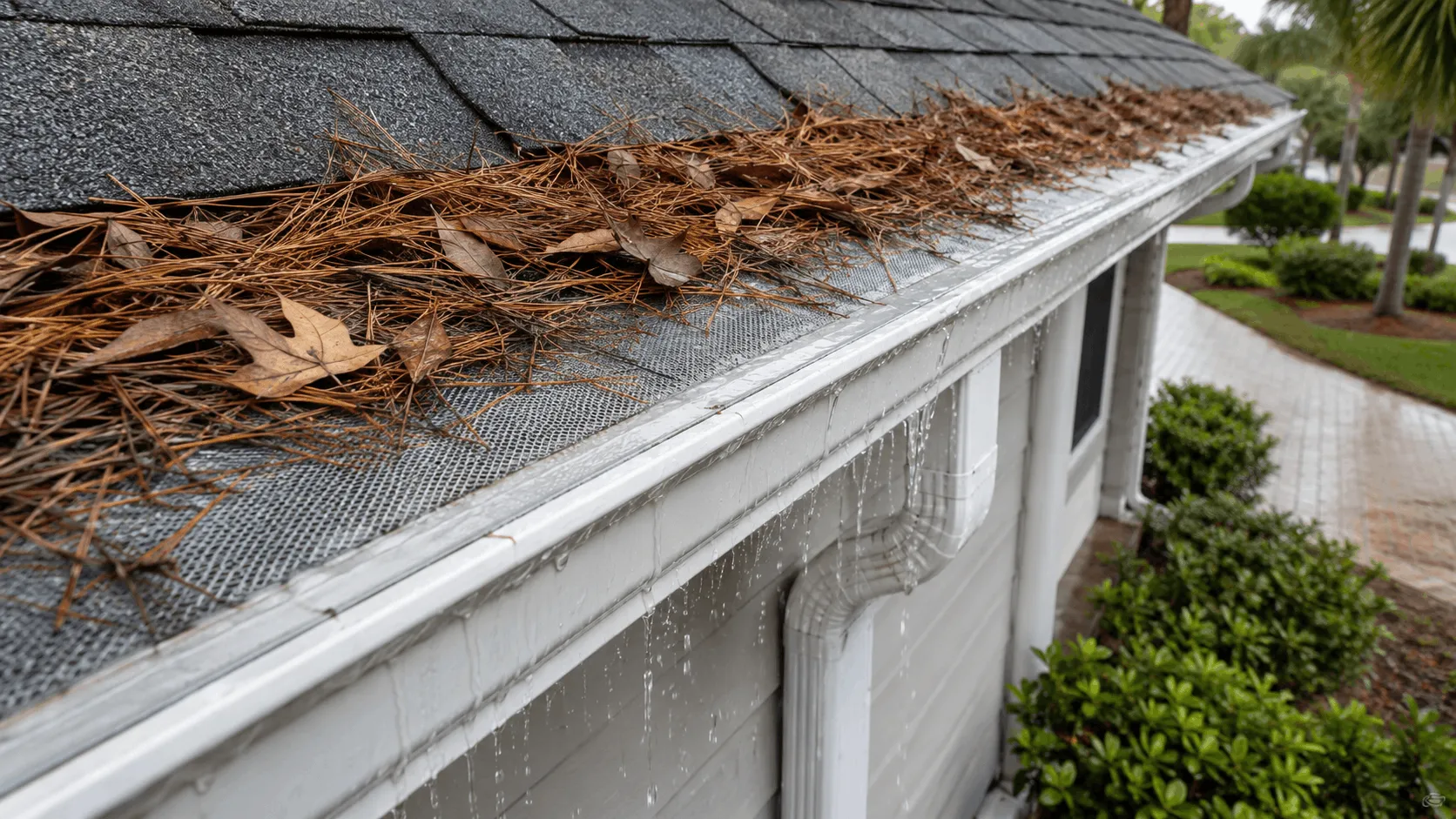
Blocked outlets and elbows come from what falls into the gutter. A run that fills with leaves and debris overflows even when every seam and hanger is sound.
FEMA’s hurricane and flood mitigation handbook for public facilities lists regular gutter inspections to clean out vegetation and other debris that builds up and to tighten loose connections.
A lot of our commercial customers get on a repeat cleaning schedule, so it is handled without anyone having to remember it. Our gutter cleaning service covers one-time and scheduled visits.
Commercial repair or a new system
When the faults are spread along most of a run, a new system is usually the better spend. We size commercial gutters and the number of downspouts to the roof area feeding each run, and we measure the building before quoting.
Getting a commercial repair booked
It starts with a call to (850) 819-6031 or the online form. We visit the building and check the roofline and access, and you will know what the repair costs.
You get a written quote, which is usually what a property manager or owner needs before signing off. Once we get started, our crew does the approved work and clears up the area, and you have one point of contact for the job.
Common commercial gutter problems
| What you see | Usual cause | Usual repair |
|---|---|---|
| Water over the front edge in ordinary rain | A blocked outlet or elbow, or too few downspouts for the run | Clear the blockage, or add a downspout where a run needs one |
| A drip at a seam or corner after rain | A seam that has opened | Reseal the seam or replace the section |
| A section that dips between hangers | Hangers pulled loose or spaced too far apart | Reset the pitch and add hangers |
| A downspout hanging loose | A joint or bracket has come apart | Reconnect and refasten it |
| Water across an entrance or parking area | A downspout emptying in the wrong place | Move the outlet, or add an elbow or extension |
| Bent or separated runs after a storm | Wind or debris damage | Reattach sections and replace damaged lengths |
Sources
- Fact Sheet 3.3.2: Roof Systems, Low-Slope Roofs (Hurricane and Flood Mitigation Handbook for Public Facilities, FEMA P-2181), FEMA, March 2022. Regularly inspect gutters, clean out vegetation and other debris, and tighten loose connections