What this guide covers
This guide is about one symptom: water spilling, pooling or backing up at the bottom of a downspout, where the pipe meets its elbow, an extension, or a pipe into the ground.
Choosing between an extension, a splash block and an elbow is a different question, covered in downspout extensions.
What a downspout backup looks like
A downspout backup at ground level can show up in any of these ways during rain.
- Water bubbling or spilling out at the joint between the pipe and the bottom elbow.
- A puddle at the base of the downspout while the end of the extension stays dry.
- Water spraying from a joint low on the pipe.
- Water rising out of the opening where the downspout goes into the ground.
Record it from the ground
Note what you see during rain from the ground, from a dry spot, without climbing anything.
- Which downspout. The side of the house and the nearest door or window.
- When. Only in heavy rain, in every rain, or after the rain stops.
- Where the water escapes. At the bottom elbow, at a joint above it, or where the pipe enters the ground.
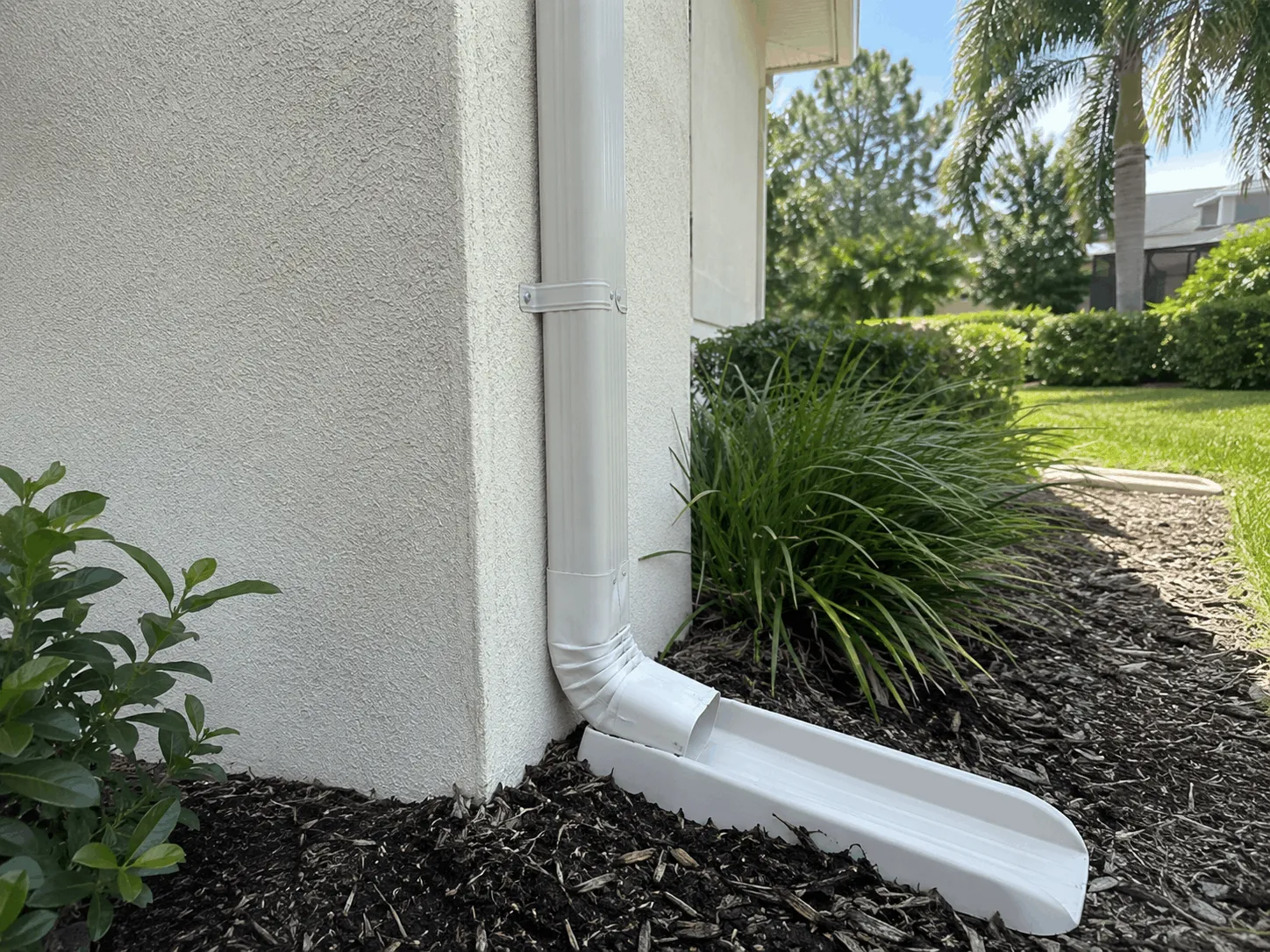
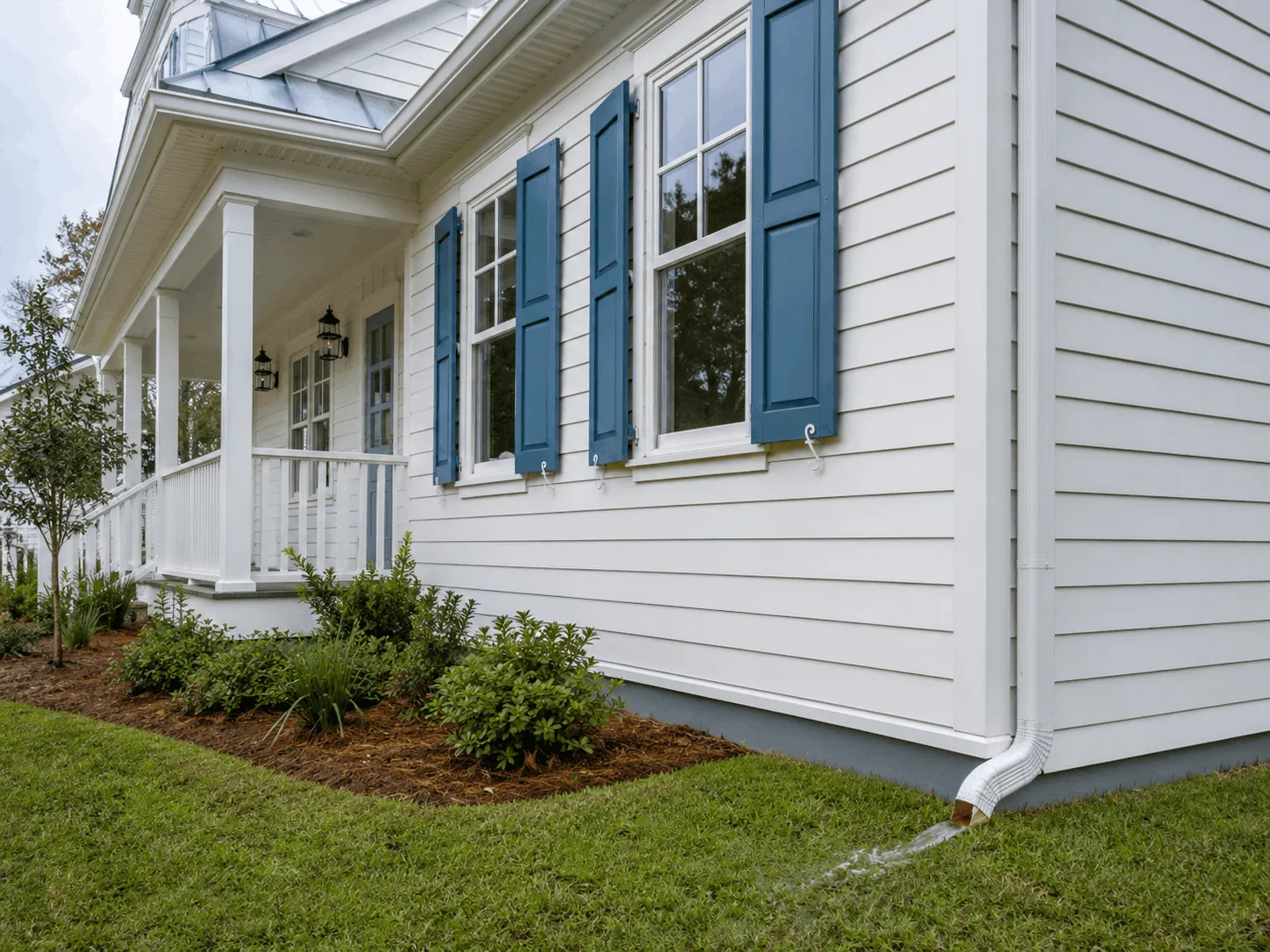
- What is at the bottom. An elbow onto the ground, an extension, a splash block, or a pipe into the ground.
- How long it stays. Whether the puddle drains within an hour or is still there the next day.
A short video or a photo taken during rain shows more than a description.
Visible causes above ground
- A loose or separated bottom elbow. Water escapes at the joint instead of running through.
- A crushed or kinked extension. A mower, a wheel or foot traffic can do it. Water backs up behind the narrowed section.
- An extension end buried or blocked. Mulch, soil or grass over the outlet stops the water leaving.
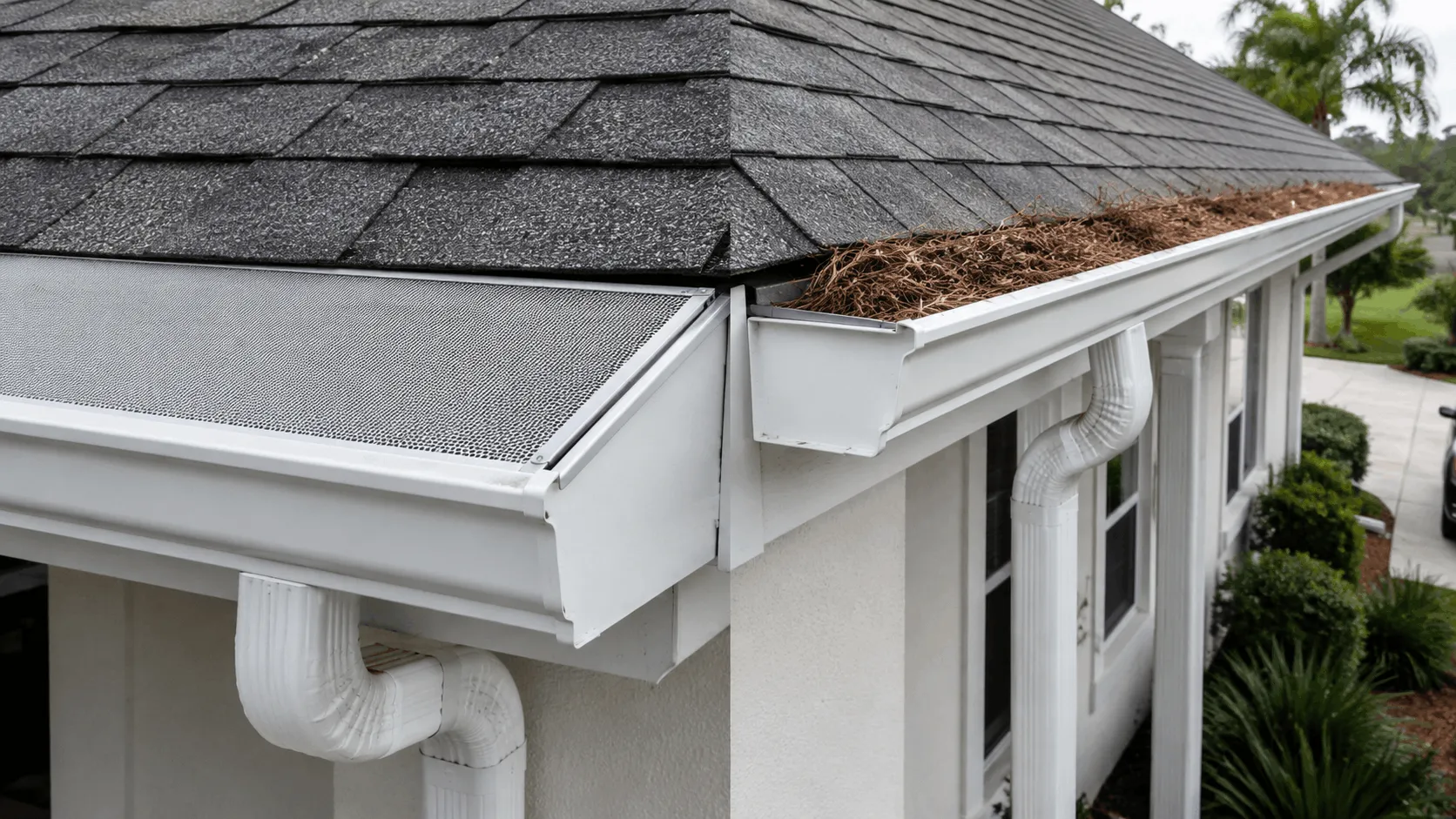
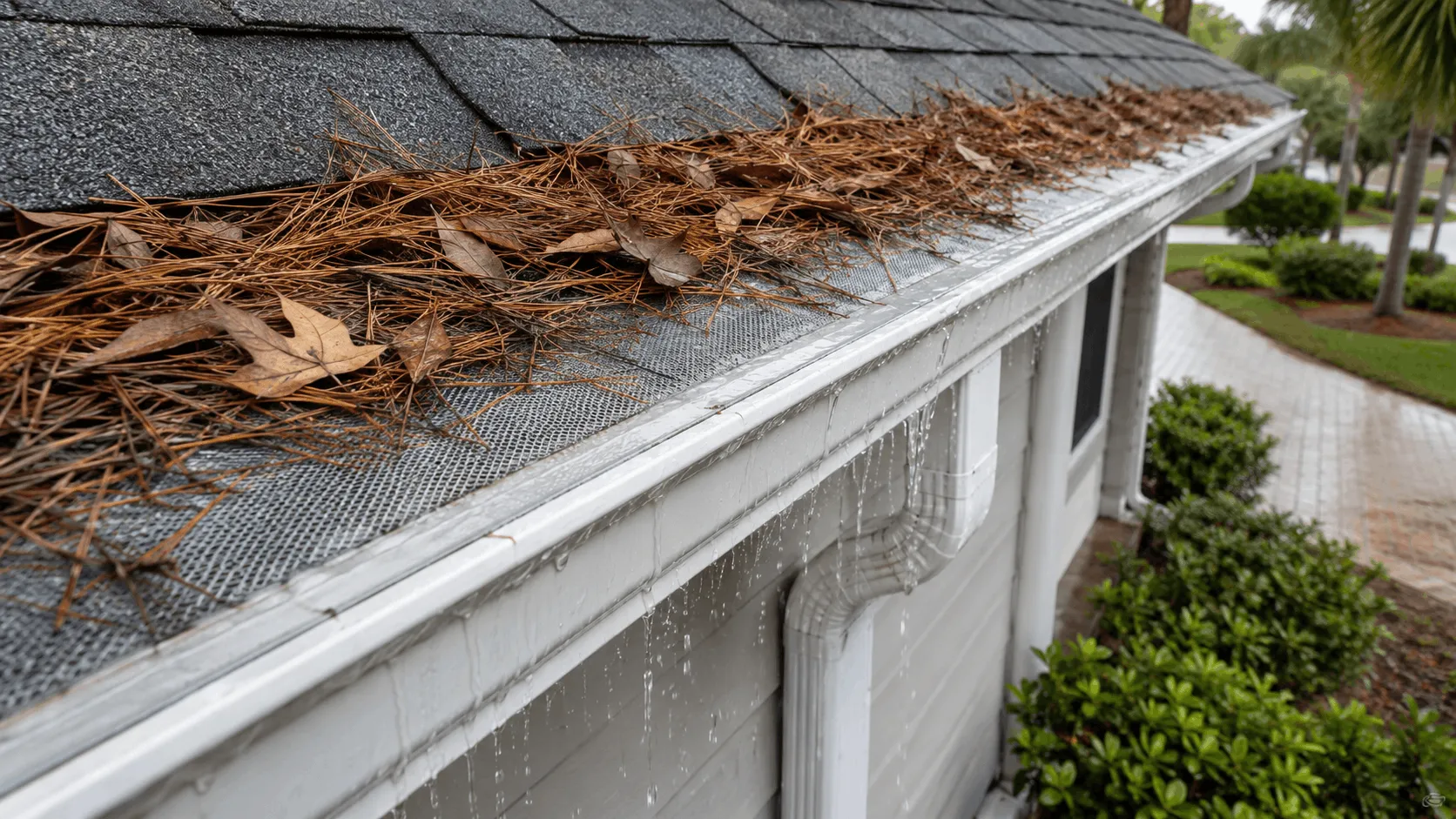
- Debris in the bottom elbow. Needles and leaves that came down the pipe can lodge where it turns.
- A splash block tipped back toward the wall. The water lands and runs straight back to the base of the pipe.
- An opened seam low on the pipe. Water sprays out before it reaches the bottom.
These are visible gutter and downspout repairs. Our downspout work covers refastening and replacing elbows and lengths, resetting extensions and splash blocks, and moving an outlet when the water is landing in the wrong place.
What you can do from the ground
A few things are safe to do at ground level without tools or digging.
- Pull mulch, soil or grass back from the end of the extension so the outlet is open.
- Set a tipped splash block level, with its open end pointing away from the wall.
- Keep mowers and wheels clear of extensions laid across the lawn.
Anything beyond that, such as taking apart a joint, pushing a rod into the pipe or digging around a buried connection, is work to leave to a contractor. After any change, watch the next rain from a dry spot to see whether the backup has stopped.
When the pipe goes into the ground
Some downspouts connect to a buried pipe at the bottom instead of releasing onto the ground. If water rises out of that connection during rain while the elbow and the pipe above it are clear and joined, the restriction may be in the buried pipe.
A blocked bottom elbow can look the same from the ground. But if the visible parts are clear and the backup continues, the next call is a drainage contractor. Buried pipe, French drains, grading and excavation are drainage contractor work, and we do not install or repair them.
One sign is not a diagnosis
A puddle at the base of a downspout has more than one possible cause. The ground may slope back toward the house, so water released correctly runs straight back. The gutter above may be spilling over in heavy rain and landing at the base of the pipe. A seam may be leaking higher up.
Looking at more than one sign at once is what narrows it down: where the water escapes, when it happens, and whether the end of the extension is wet or dry.
Two hypothetical examples
In the first, a homeowner sees a puddle at the base of the back-corner downspout after heavy storms. From the ground, the end of the extension is half buried in mulch, and the bottom elbow has a visible gap. Both are above-ground faults: the elbow is refastened, the extension is reset clear of the mulch, and a splash block goes under its end.
In the second, water rises out of the point where a downspout enters the ground, every time it rains. The elbow and pipe are tight and clear, and nothing above ground is restricting the flow. The likely problem is below grade, and the call that makes sense is to a drainage contractor.
Getting the downspout looked at
Our work covers the downspout and what attaches to it above ground. Call (850) 819-6031 or use the online form, and we will come out and look at it.
Symptom, what to look at, and who to call
| Symptom | What to look at from the ground | Next contact |
|---|---|---|
| Water spilling at the bottom elbow | A gap or loose joint at the elbow | Gutter and downspout contractor |
| Puddle at the base, extension end dry | A crushed, kinked or blocked extension, or debris in the elbow | Gutter and downspout contractor |
| Extension end buried | Mulch, soil or grass over the outlet | Reset or clear it; a contractor if it is damaged |
| Water spraying from a joint on the pipe | An opened seam or separated section | Gutter and downspout contractor |
| Water running back to the wall from the outlet | A tipped splash block, or ground sloping toward the house | Gutter contractor for the fittings; drainage contractor for grading |
| Water rising where the pipe enters the ground, visible parts clear | Whether the elbow and pipe above are tight and clear | Drainage contractor |
| Puddle at the base in heavy rain only, gutter spilling above | Water coming over the gutter edge | Gutter contractor: gutter size or downspout count |