The baseline, and why it is only a baseline
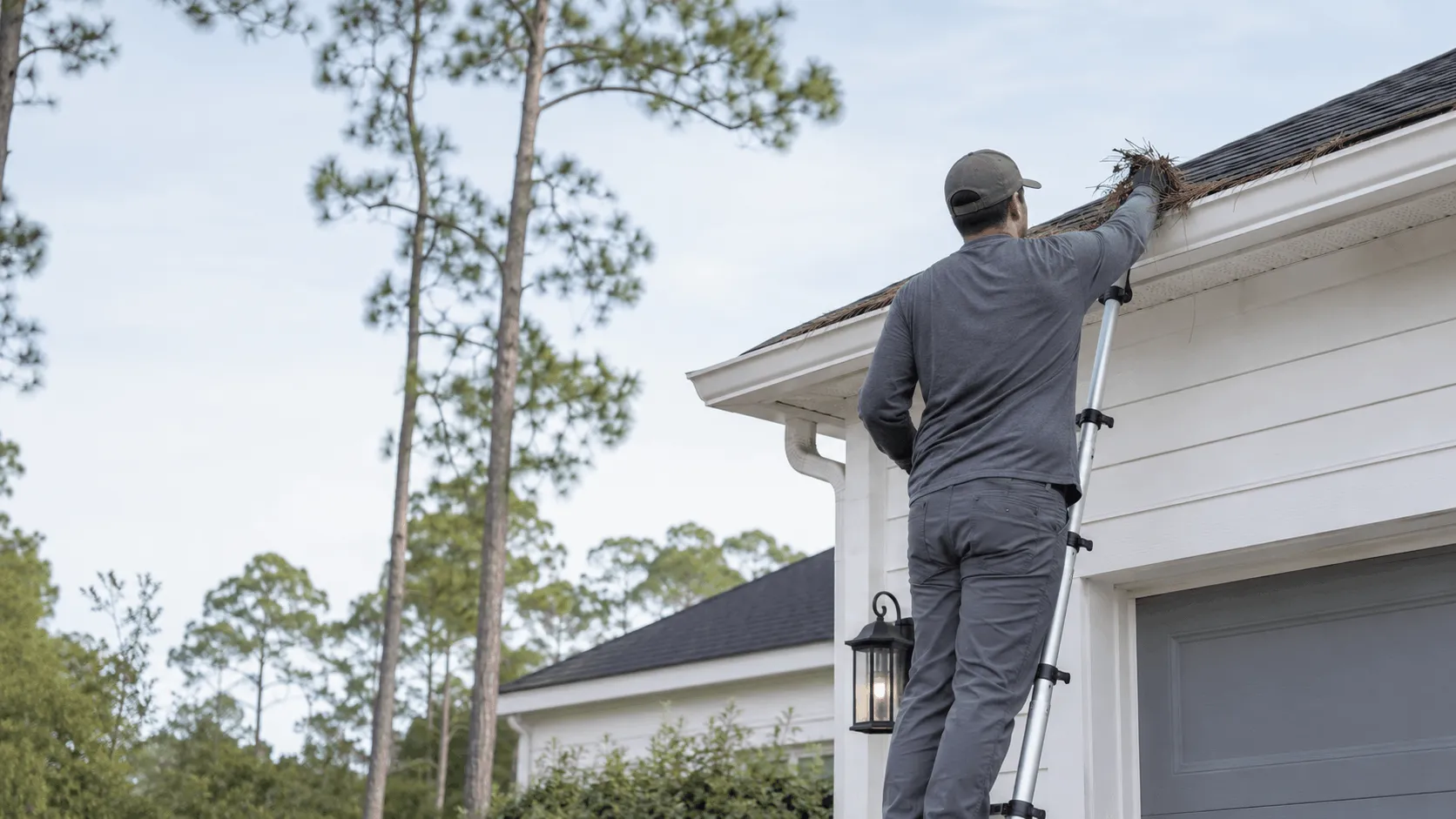
Twice a year is the practical starting point across the Florida Panhandle: once in late spring ahead of storm season, and once after the main leaf fall. That covers most properties with moderate tree cover.
It is a baseline rather than a rule because the interval is set by what is above the roof, not by the calendar. Two houses on the same street can genuinely need different schedules if one sits under mature pine and the other does not.
What pushes the interval shorter
Several conditions commonly justify more than two visits a year.
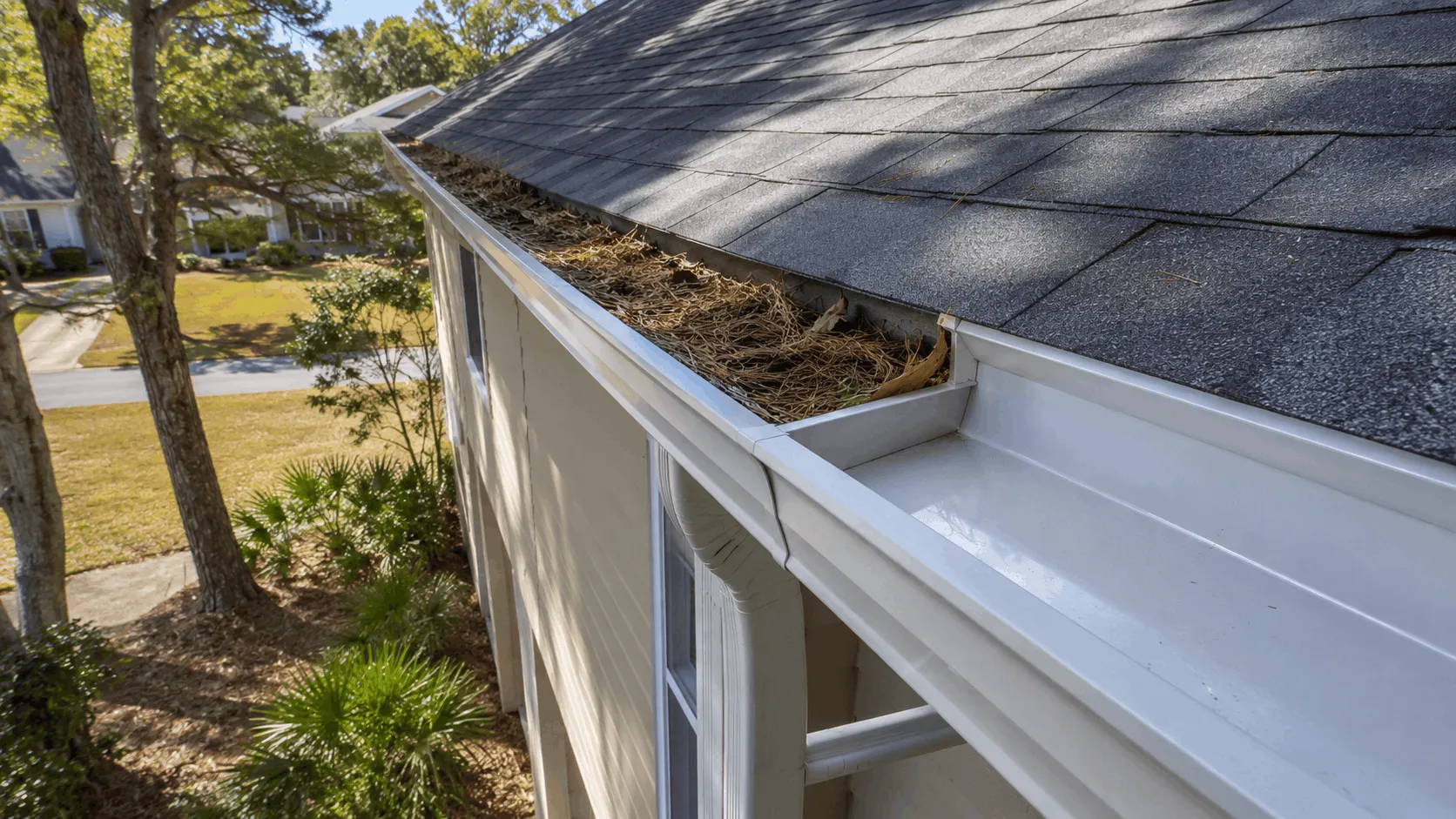
- Heavy pine canopy. Pines shed in waves rather than a single seasonal drop, so gutters can refill between conventional cleaning dates.
- Overhanging oak. Leaves, twigs, acorns and seed all arrive in volume and compact readily.
- Low roof pitch. Debris that would slide off a steeper roof tends to settle and work toward the gutter line.
- Complex rooflines. Valleys concentrate both water and debris onto short sections of gutter.
- Recent storm activity. A single wind event can load gutters more than a normal season.
What allows a longer interval
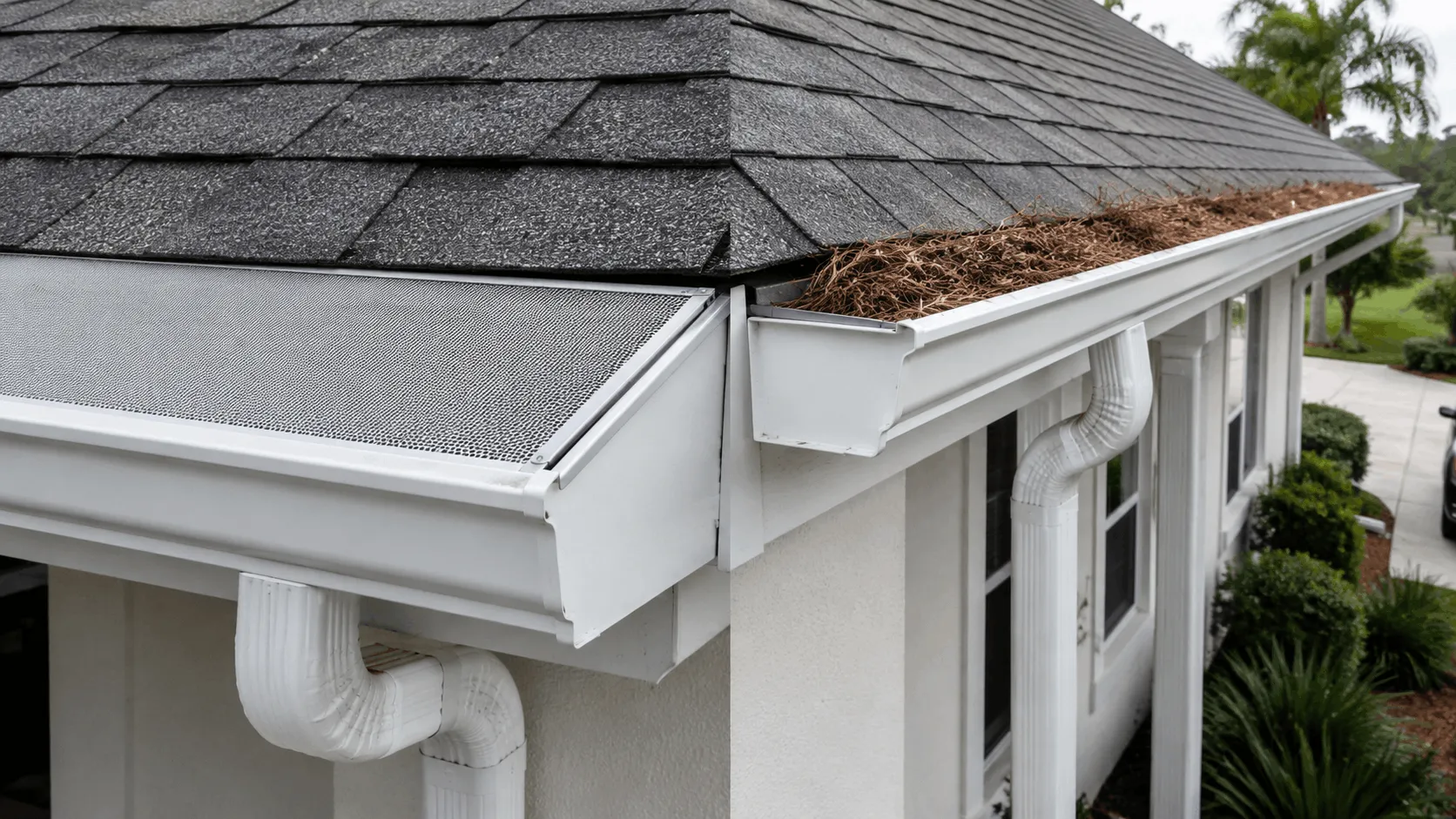
Properties with the roofline genuinely clear of overhanging canopy, simple roof shapes and steeper pitches often manage comfortably on an annual check. Micro-mesh guards, where fitted correctly, also extend the interval considerably.
Even then, an annual look is worth keeping. Fine shingle grit accumulates regardless of tree cover, and hangers, joints and fascia all benefit from being seen once a year rather than discovered failing.
Timing matters as much as frequency
Two well-timed visits beat three badly timed ones. The most useful check is before the heaviest rainfall period rather than after it, because that is when a blocked gutter causes damage rather than merely inconvenience.
In this region that argues for a clear-out in late spring, with the second visit timed to whenever the bulk of the debris on your particular property has come down. Under pine, that may not line up with a conventional autumn date at all.
Signs you have left it too long
A few indicators are visible from the ground and worth acting on before the next storm.
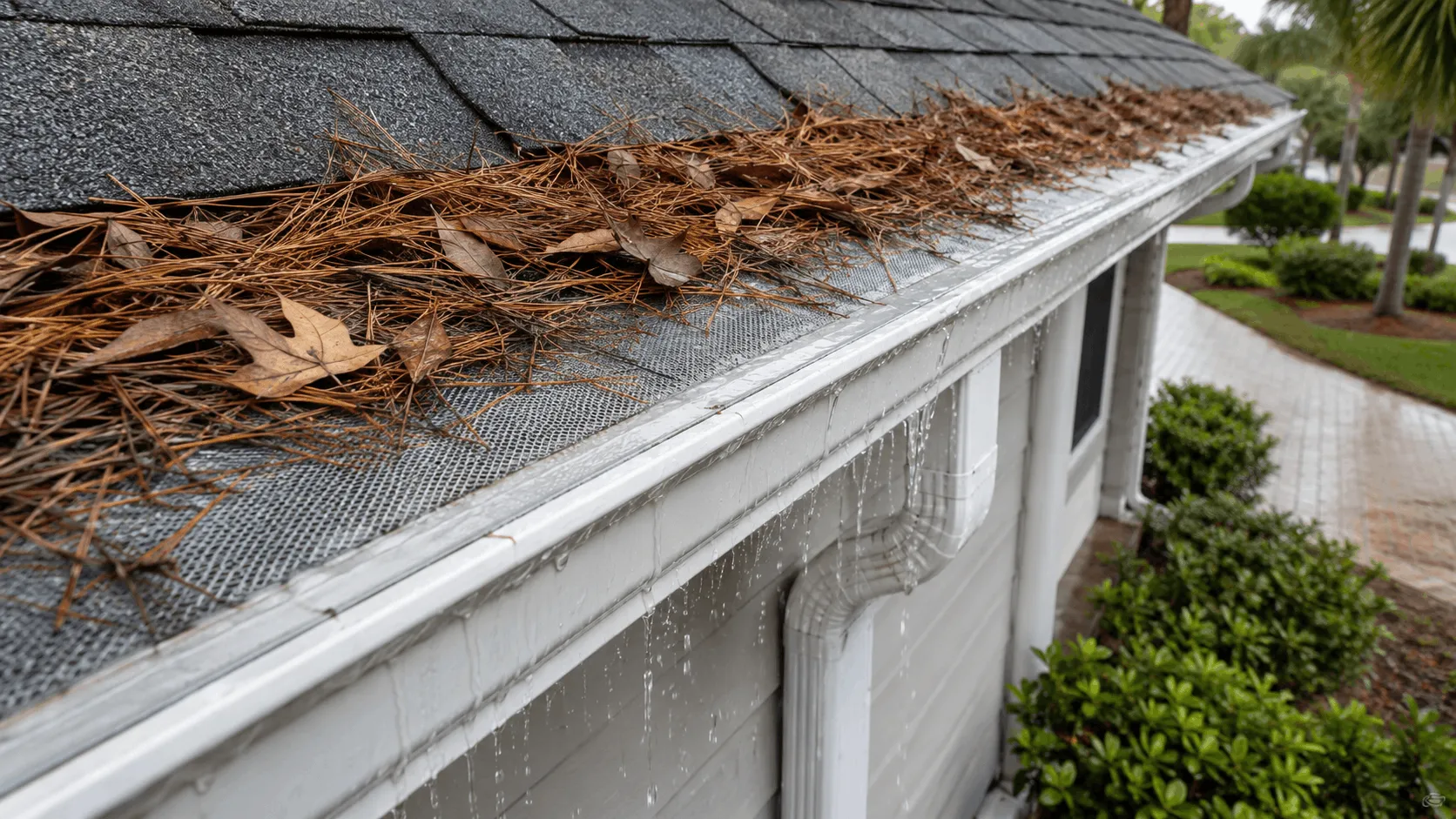
- Water spilling over the front edge during rain rather than running to the downspouts.
- Plants or seedlings growing out of the gutter.
- Staining or streaking down the outside face of the gutter.
- Visible sag between hangers, or a run sitting lower than it used to.
- Water pooling against the foundation below a particular section.
Growth in a gutter in particular means material has been retaining water for a long time, and the fascia behind is worth checking as well as the gutter.
What skipping years actually costs
Deferring cleaning rarely saves money. Compacted debris takes longer to remove, so the eventual visit is a heavier job. Retained water sits against the back of the gutter and the fascia board behind it, and the added weight works on the hangers.
The failure modes that follow are more expensive than the visits avoided: sagging runs that need rehanging, joints that separate, and fascia that needs repair before anything can be hung on it again.
Setting a schedule for your property
The practical approach is to start at twice a year, then adjust after the first couple of visits based on what actually comes out. If the second clearing is nearly empty, stretch the interval. If the first is overwhelming, tighten it or look seriously at guards. Tell us what is overhead and how long it has been, and we can confirm what the visit involves before scheduling anything.
Common questions
How often should gutters be cleaned in Florida?
Twice a year is a sensible baseline for most Panhandle properties, timed to late spring before storm season and again after the main debris fall. Heavy pine or oak canopy overhead often justifies more; rooflines clear of trees may manage on an annual check.
When is the best time of year to clean gutters here?
Before the heaviest rainfall period rather than after it, since that is when a blocked gutter causes damage. Late spring is the most useful single date for most properties in this region.
Do I still need cleaning if I have gutter guards?
Less often, but yes. Fine shingle grit passes through most mesh and accumulates slowly, and the guard surface and downspouts still benefit from periodic checks.
What happens if gutters are never cleaned?
Debris compacts and holds water against the gutter and fascia, weight works on the hangers, and runs begin to sag or separate. The repairs that follow generally cost more than the visits that were skipped.
How do I know if my gutters need clearing now?
Water spilling over the front edge in rain, staining down the outer face, visible sag, growth in the gutter, or pooling at the foundation below one section are all reasons to look sooner rather than later.