What drives gutter guard pricing
Guard pricing tracks the material more than anything else. Screen and foam sit at the cheap end, micro-mesh at the top, and reverse-curve somewhere between. The gap between them is not only manufacturing cost but how long each type keeps working in the conditions it is fitted into.
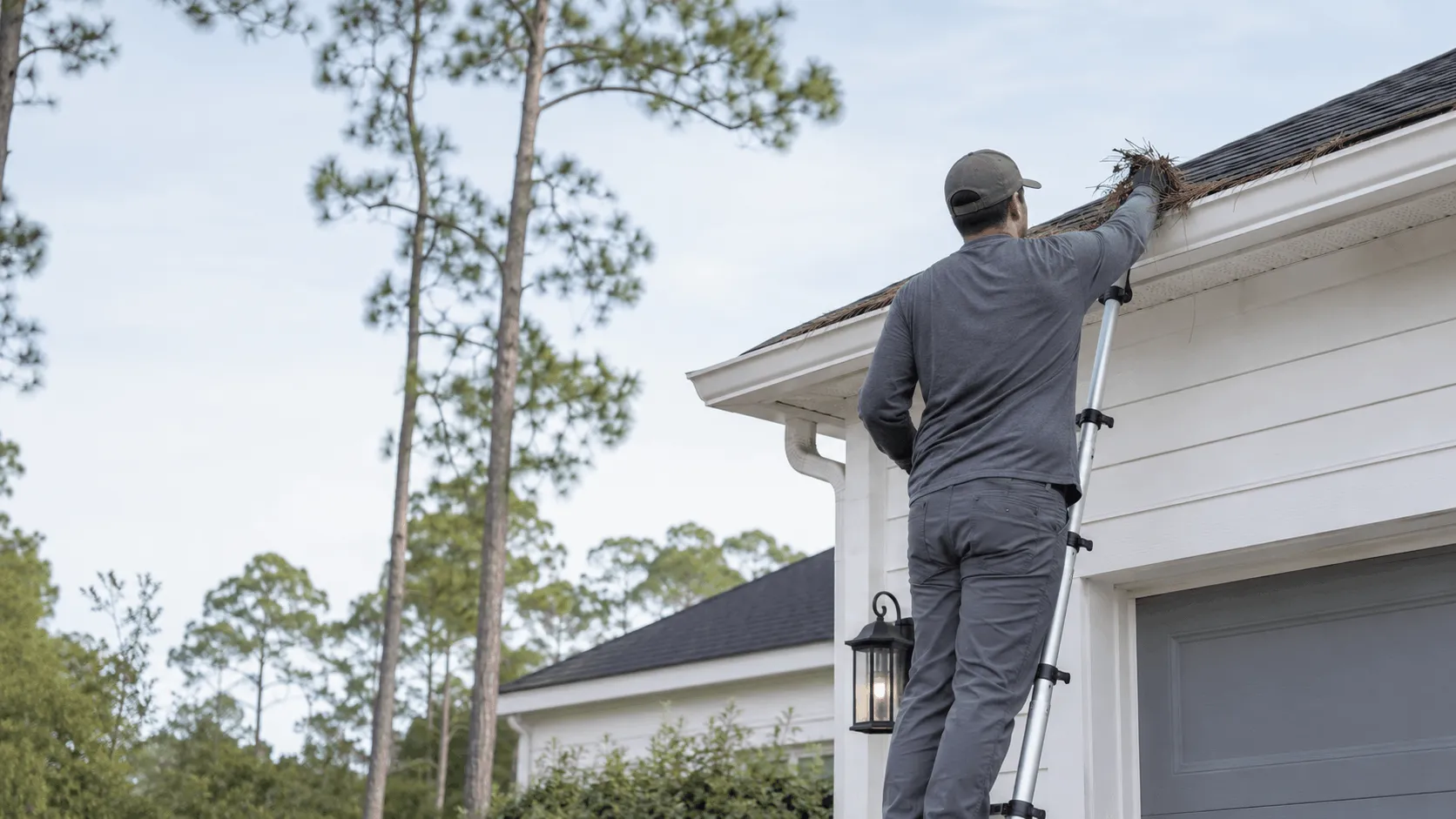
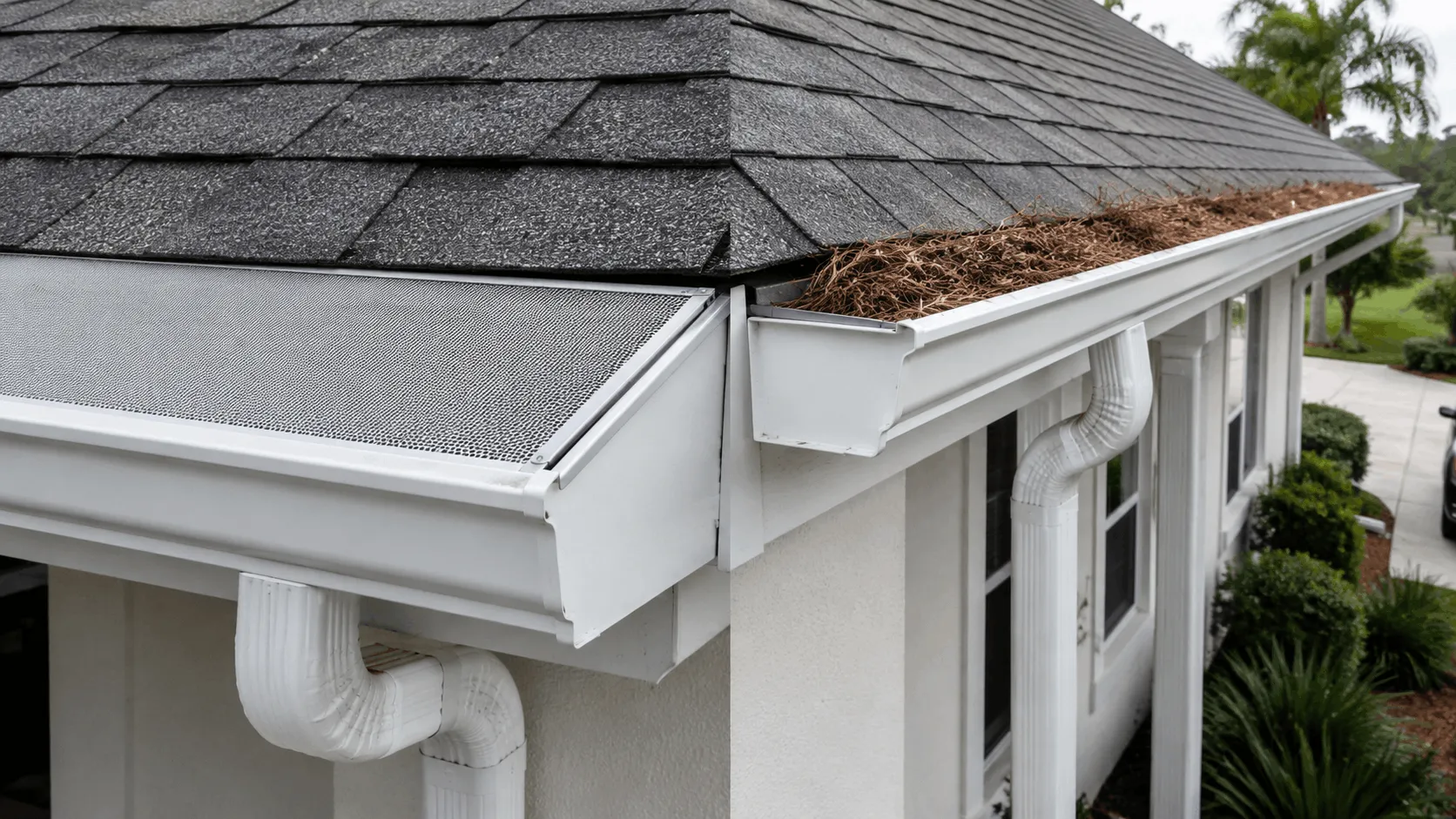
In a pine-straw climate the cheaper options tend to be a false economy. Foam saturates and holds moisture, and wide-gauge screen lets fine needles through while trapping them on top. Either way you end up paying someone to clear or replace them, which is the cost the guards were bought to avoid.
What an installed price should include
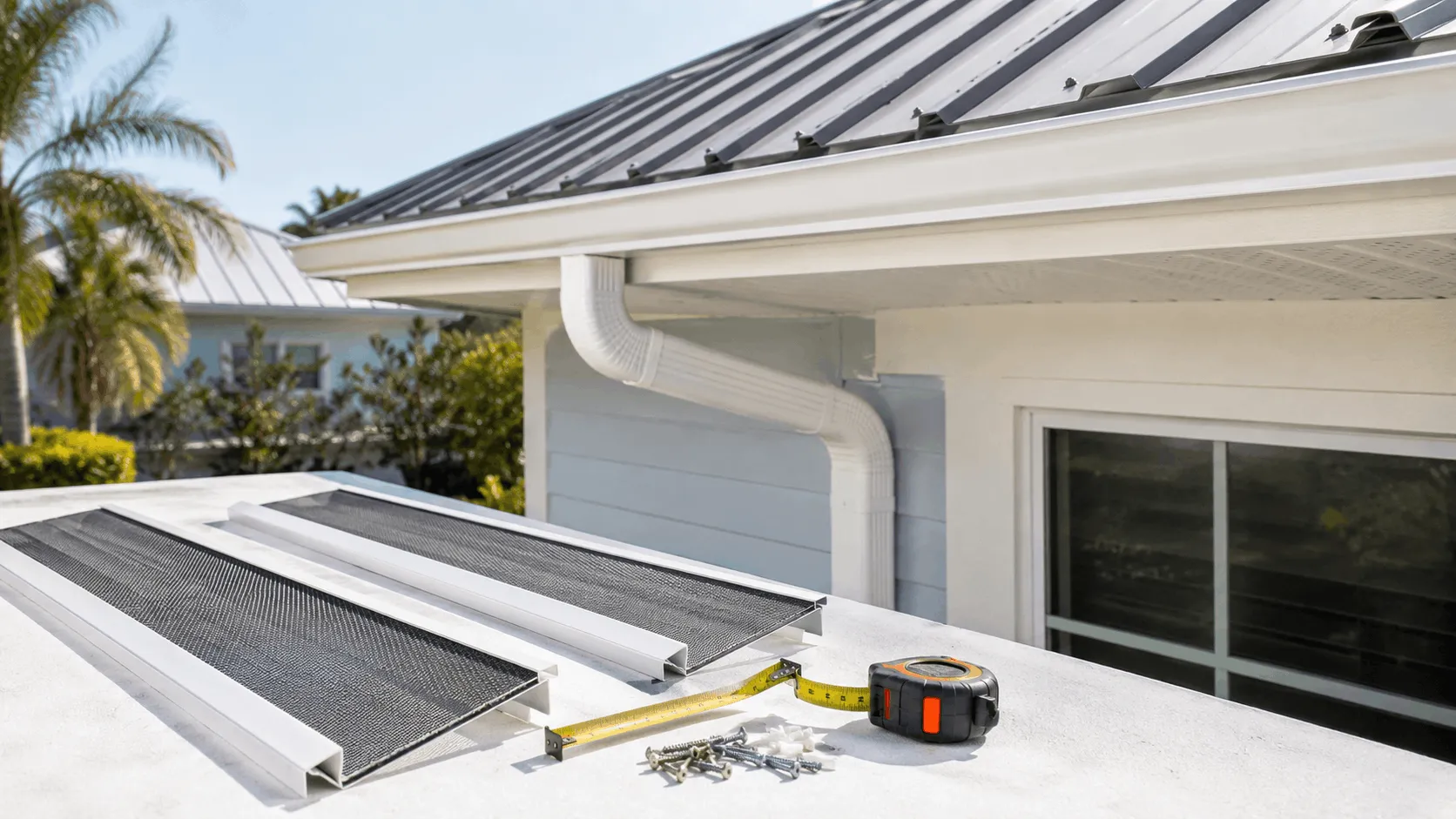
A micro-mesh quote should cover more than the mesh. The gutters have to be cleared and checked first, because fitting a guard over a system that is already sagging, blocked or pitched wrong locks the problem in place where it is harder to reach.
The install itself should account for wind. Guards that are simply laid in or friction-fitted can lift, and a guard that has shifted is worse than none at all because debris collects in the gap. Securing the mesh properly is part of the job, not an extra.
The variables that change your number
Beyond guard type, the same things that drive gutter pricing drive guard pricing.
- Linear footage. Guards are priced by the foot, so total roofline length is the base figure.
- Story count and access. Height and how safely the roofline can be reached change the labor more than the material.
- Existing gutter condition. If the gutters need repair or repitching first, that work comes before guards and is quoted separately.
- Roof pitch. Steeper roofs move water faster, which affects how debris behaves on the mesh surface.
- Mesh quality. Stainless micro-mesh in a rigid frame costs more than thin mesh on a light backing, and lasts differently.
Judging payback against cleaning
The useful way to think about guards is total cost over several years rather than the price on the day. If your tree cover forces two or more cleaning visits a year, guards that genuinely cut that cadence start to pay for themselves over a few seasons.
If your roofline sits clear of overhanging canopy and gutters need attention roughly once a year, the payback stretches out considerably, and it is fair to say so rather than push the upgrade. The honest recommendation depends on what is actually falling on your roof.
That assessment is part of the estimate, not a separate consultation.
What guards do not remove
Gutter guards reduce debris entry, but no system eliminates every maintenance need. Fine grit from asphalt shingles still washes through most mesh and can build up over years. Pollen and seed fall can form a film on the mesh surface. Valleys that dump concentrated flow onto a short section of guard need occasional attention.
A good guard turns a twice-yearly clearing job into a much lighter periodic check. It does not turn gutters into something you never look at again, and any product sold on that promise is overselling.
Comparing guard quotes properly
If you are weighing two guard prices, the specification matters more than the total. Ask what mesh and frame material is used, how the guard is fixed, whether the gutters are cleared and adjusted first, and what happens if a section needs lifting later for access. A cheaper number often answers those questions differently rather than doing the same work for less.
Getting a guard price for your property
Guard pricing is quoted from the roofline, the tree cover around it and the whether you need new gutters or service for an existing system. The estimate is free and given in writing, and if guards are not the right spend on your property we will tell you that instead.
Guard types and relative cost
| Guard type | Up-front cost | In a pine-straw climate |
|---|---|---|
| Screen | $ | Clogs fast |
| Foam | $ | Clogs, holds moisture |
| Reverse curve | $$ | Inconsistent |
| Micro-mesh | $$$ | What we install |
Cheap guards are the most expensive option over five years in this climate. The math almost always favors doing it once, correctly.
Common questions
How much do gutter guards cost?
Guard pricing is driven by guard type, linear footage, story count and access, and whether the existing gutters need work first. Micro-mesh sits at the higher end of guard pricing because of the mesh and frame materials involved. The figure for a specific property comes from the written estimate.
Are expensive gutter guards worth it in Florida?
In areas with heavy longleaf or slash pine cover, a quality micro-mesh usually outperforms cheaper screen and foam by enough to justify the difference, because the cheap types clog on fine pine straw. With little overhead canopy, the case is weaker and worth questioning.
Do gutter guards need to be cleaned?
Yes, less often but not never. Fine roof grit, pollen and seed fall can build on the mesh surface over time, and concentrated flow from roof valleys can need occasional attention. Guards reduce maintenance rather than remove it.
Can guards be fitted to my existing gutters?
Usually, provided the gutters are sound, correctly pitched and properly secured. If they sag, leak or are undersized, that gets addressed first, because a guard fitted over a failing gutter makes the underlying problem harder to reach.
Do gutter guards void anything on my roof?
That depends on your roofing manufacturer and installer terms, not on us. If your roof is under an active warranty, it is worth checking the wording before any product is fixed near the roof edge.