Gutter Installation Tools: Complete Guide to Equipment, Tips, and Best Practices
Installing a gutter system correctly is essential for protecting your home from water damage, roof leaks, foundation issues, and soil erosion. However, a successful installation does not happen by accident. It starts with knowing which gutter installation tools you need and how to use them correctly. Whether you are planning a DIY project or preparing to oversee a professional installation, understanding the right tools helps you achieve strong, long-lasting results while reducing mistakes, safety risks, and time spent on the job.
Why Gutter Installation Tools Matter
Using the correct tools for gutter installation is about more than convenience. It directly affects the quality and durability of your finished system. Gutters must be installed with precision so water flows smoothly toward downspouts without sagging, leaking, or pulling away from the fascia. Without proper tools, you risk misaligned components, loose fasteners, uneven slopes, and inefficient drainage. These issues often lead to water spilling over the edges during rainstorms, which defeats the purpose of having a gutter system. With the right equipment, even complex rooflines become manageable, and your installation will be safer, faster, and more accurate.
Essential Hand Tools for Gutter Installation
A successful gutter installation begins with reliable hand tools that allow you to measure, cut, secure, and adjust components accurately. Precision is critical when preparing gutter sections, downspout outlets, and guard attachments. Quality hand tools help prevent common problems such as jagged cuts, misdrilled holes, or stripped fasteners. Even experienced installers rely on these basic tools because they ensure each part of the gutter system fits together securely and functions as intended.
Measuring and Marking Tools: Getting Every Line Right
Before any gutter section is mounted, accurate measuring and marking are essential. The slope, length, and placement of each section must be planned before cutting or assembly. Measuring tapes are used to determine the exact length of each gutter run and downspout section, ensuring materials fit the roofline without gaps. Chalk lines help mark a consistent slope across the gutter run, which is critical for directing water toward the downspouts. Without proper layout and marking, the system can become unbalanced, leading to standing water and premature failure.
Cutting Tools: Precision for Gutter Sections
Cutting tools are necessary for shaping gutter sections, downspouts, and custom pieces that fit around corners and roof intersections. Tin snips and metal shears allow for precise cuts in aluminum and steel gutters. Cuts should be made carefully to avoid bending or stressing the material. Sharp, well- maintained blades create clean edges that fit together smoothly and simplify sealing. For longer, straight cuts, a power saw with a fine metal-cutting blade may be used, especially on larger installations. Clean, accurate cuts help ensure the finished system looks professional and performs correctly.
Fastening Tools: Secure and Weather-Resistant Connections
Once gutter components are positioned, fastening tools are essential for securing the system to the fascia. Electric drills or impact drivers allow fasteners to be installed quickly without stripping heads or losing grip. Outdoor-rated screws resist rust and corrosion, which is important since gutters are constantly exposed to moisture. Rivet guns are often used to secure overlapping sections and reinforce joints that experience movement or stress. Using the proper fastening tools ensures hangers, connectors, and end caps remain secure during heavy rain and storms.
Ladders and Safety Equipment: Protecting Yourself on the Job
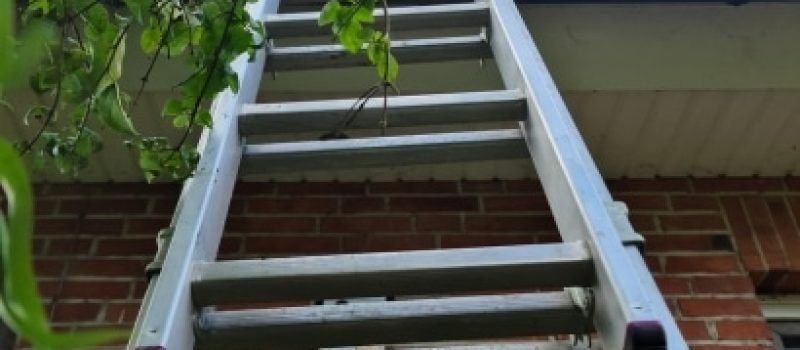
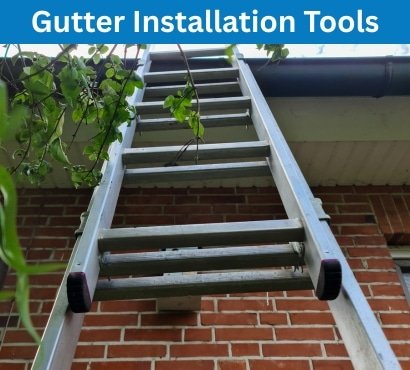
Installing gutters requires working at height, which introduces safety risks that should never be ignored. A sturdy extension ladder with a stabilizer provides better balance and prevents damage to gutter edges during installation. Ladder stabilizers distribute weight evenly and reduce the chance of slipping. Safety equipment such as gloves and eye protection help protect against sharp metal edges and debris, while non-slip footwear improves stability on uneven ground. For tall or complex rooflines, scaffolding or professional installation may be the safest option.
Sealing and Finishing Tools: Making the System Weather-Tight
After gutters and hangers are installed, sealing tools help protect the system from leaks. A high-quality gutter sealant applied with a caulking gun seals seams, joints, and end caps where water could escape. Applying a smooth, continuous bead of sealant improves resistance to wind-driven rain and reduces future maintenance. Proper sealing also improves the appearance of the installation, giving the gutter system a clean and finished look that blends with your home’s exterior.
Testing Tools: Confirming Proper Water Flow
Once installation is complete, testing tools such as a garden hose are used to confirm proper drainage. Running water through the system simulates rainfall and helps identify areas where water may pool or spill over. This step allows adjustments to slope and connections before problems develop. Observing water flow confirms that the installation tools and techniques were used correctly and that rainwater moves smoothly from the roofline to the ground.
Tips for Choosing Quality Gutter Installation Tools
Choosing gutter installation tools is not just about having the right list. Tools should be durable, comfortable to use, and designed for outdoor conditions. Lightweight but strong tools reduce fatigue during longer installations, especially on larger homes. Corrosion-resistant finishes extend tool life, while ergonomic grips improve control during repetitive tasks. Investing in quality tools saves time, improves accuracy, and reduces safety risks, resulting in a gutter system that performs reliably for years.
Conclusion
Understanding which gutter installation tools to use and how to apply them correctly turns a potentially frustrating project into a successful home improvement task. From measuring and cutting to fastening, sealing, and testing, each tool plays an important role in creating a long-lasting gutter system.
Proper tools improve precision, reduce mistakes, enhance safety, and ensure water flows away from your home’s foundation without interruption. Whether you are installing gutters for the first time or replacing an aging system, using the right equipment sets the foundation for effective rainwater management and long-term home protection.